
Hair
Women's health
Men's health
Wellness
Quick answer
How often should you get a facial? There’s no single once-a-month rule for everyone. An aesthetician quoted by Cleveland Clinic suggests every four to six weeks for a standard facial, but your skin, your concern and how your skin responds all matter, and clinic treatments such as chemical peels, microneedling and LED light therapy follow their own planned series.
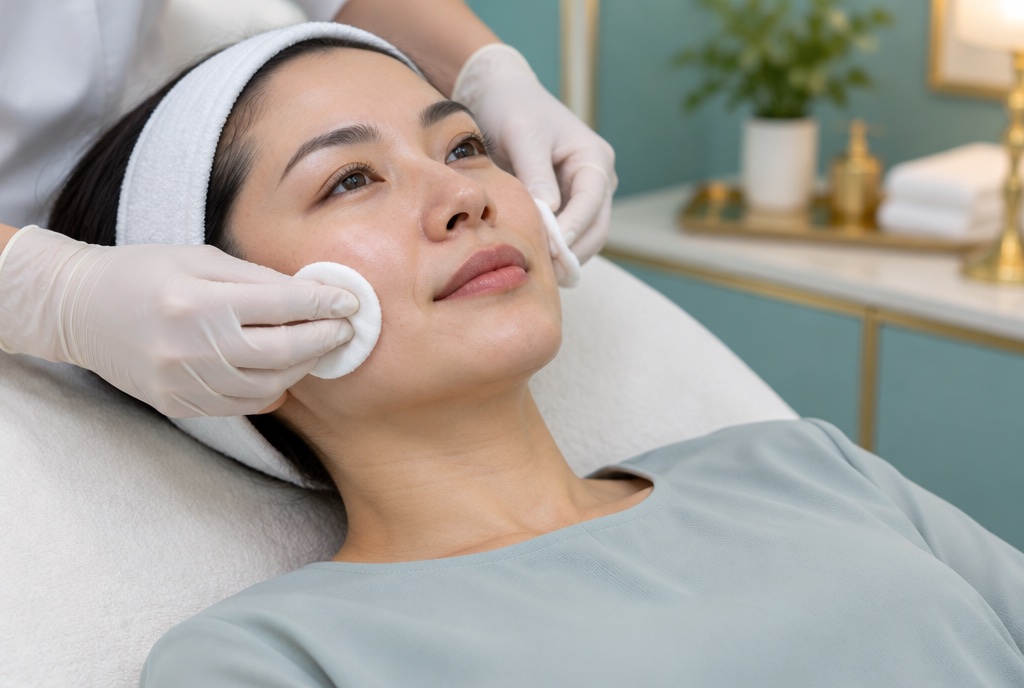
Every four to six weeks is a common suggestion, not a medical rule. The aesthetician in Cleveland Clinic’s guide says how often depends on the skin issues you’re dealing with, and links that interval to the skin’s natural cycle of about 30 days.
A standard facial usually includes cleansing, exfoliation, a mask, moisturiser and a light massage of the face and neck. It may also include steaming, serums or extraction of blackheads and whiteheads. You don’t need every add-on at every visit: the same aesthetician says extras are not necessary each time.
She suggests keeping a consistent routine while you are working on a specific concern, then stretching the gaps once your skin is doing well. A regular booking doesn’t mean each appointment needs more products or a stronger treatment.
The W Facial at Westwood Clinic is a multi-step clinic facial with cleansing, exfoliation, masks and serums, and a facial massage. Caring for your skin between facials helps you keep the results, Cleveland Clinic’s aesthetician notes; read how clinic facials and home skincare work together.
Your goal decides whether you are booking a standard facial or a course of treatment. Cleveland Clinic describes facials as meant to address skin concerns, support overall skin health and help you relax, and each of those aims sets a different pace.
Use the four-to-six-week suggestion as a starting point, then adjust. If your skin stays calm between appointments, there’s no need to treat the calendar as an order to book.
Acne, uneven skin colour, rough texture or fine lines often lead to a planned series of treatments, such as light chemical peels, rather than a repeat of the same facial. Start by asking which facial treatment suits your skin, then talk about the spacing for that particular treatment.
Wanting to relax is a fair reason to book. Ask for gentle steps and check that each visit doesn’t add another strong exfoliation on top of what you already use at home.
Corrective treatments follow a planned series, and the gaps depend on the treatment and how your skin heals. The figures below are general examples from medical sources, not a schedule set for you.
| Treatment | Usual spacing (source) | How many sessions (source) | Recovery to plan around |
|---|---|---|---|
| Light chemical peel | Every two to five weeks (Cleveland Clinic, AAD) | Typically three to five (Cleveland Clinic, AAD) | Healing takes one to seven days, with redness and possibly scaling (AAD) |
| Microneedling | A few weeks apart: about three to eight weeks (Cleveland Clinic); every two to four weeks for acne scars (AAD) | Multiple treatments; three to five for acne scars (AAD) | Skin may be red and swollen for up to five days (Cleveland Clinic) |
| LED light therapy | Often a treatment each week for about a month, then maintenance every month or every few months (Cleveland Clinic) | A series of in-office treatments (Cleveland Clinic) | Stay out of the sun for several days and use extra sunscreen (Cleveland Clinic) |
Medium and deep peels are different procedures with longer recovery and aren’t repeated on a facial-style schedule. Cleveland Clinic says recovery from a medium peel can take a week or more, and a deep peel on the face is a one-time treatment. Laser treatments such as pico laser follow their own plan, which the doctor sets after assessing your skin. Your next session should depend on how your skin healed after the last one.
For what each treatment can and can’t do, read which facial treatments actually work. Before you commit to a package, ask what would make the plan change.
Not sure which option suits you?
Talk it through at a private assessment with our team.
Yes, mostly through how much exfoliation your skin can take. That doesn’t turn into a fixed number of weeks for oily, dry or sensitive skin.
| Your skin | What to adjust | Source |
|---|---|---|
| Oily skin | May handle exfoliation more often; watch how it responds | Cleveland Clinic exfoliation guide |
| Dry or sensitive skin | Pare back exfoliation; a washcloth and a mild chemical exfoliant may suit better than scrubs | Cleveland Clinic; AAD |
| Acne-prone skin | Don’t scrub, pick or squeeze spots; see a doctor if spots are deep, painful or not improving | NHS; AAD |
| Darker skin, or skin that gets dark marks after spots | Avoid strong exfoliation, which can lead to more dark spots | AAD |
| Using retinoids, retinol or benzoyl peroxide | Tell your provider; exfoliating on top can worsen dryness or cause breakouts | AAD |
Bring a list of your skincare products, including the ones you only use now and then, and ask what to pause or continue. Men can follow the same approach: skin condition and treatment matter more than a separate rule by gender.
Yes. Over-exfoliation can leave skin red, irritated or even cracked, according to Cleveland Clinic and the American Academy of Dermatology (AAD).
Can you have too much of a good thing? Count everything your skin gets between visits, including physical exfoliants such as scrubs and chemical exfoliants such as acid products and retinol.
Can I get a facial every week or every two weeks? A weekly standard facial isn’t needed. A weekly schedule only makes sense as part of a treatment plan, such as a short course of LED light therapy, and that spacing doesn’t carry over to peels or microneedling.

Listen to your skin. When it is calm and doing well, Cleveland Clinic’s aesthetician says you may be able to move to a maintenance schedule with treatments further apart. When it is red or reactive, pause strong treatments rather than booking an extra appointment.
Go back to gentle cleansing, moisturiser and daily sunscreen while the irritation settles. The AAD notes that even a product made for your skin type can irritate, and suggests testing a new product on a small spot twice a day for seven to 10 days first.
See a doctor rather than booking another facial if spots are deep, painful, causing scars or not getting better with self-care, or if there are signs of a skin infection, as the NHS advises. If you take isotretinoin, say so: the AAD says at least one month must pass after your last pill before microneedling, and Cleveland Clinic says LED light therapy isn’t suitable for people on it.
Plan ahead and don’t try anything new right before the day. Cleveland Clinic’s aesthetician says breakouts after a first facial or new products, which she calls “purging”, should settle within a week or two, so a first facial just before a big, photo-worthy event isn’t a good idea.
For chemical peels, Cleveland Clinic advises avoiding tanning and direct sun for two weeks before each treatment, and a light peel can bring redness followed by scaling for three to seven days. Microneedling can leave skin red and swollen for up to five days.
There’s no set number of facials you need before a wedding. Tell your provider your date, any past reactions and how much visible recovery you can live with, and count photo shoots and rehearsals in that plan, not only the day itself.
For most people a gentle monthly facial is fine. The four-to-six-week interval is an aesthetician’s suggestion quoted by Cleveland Clinic, so stretch it if your skin is doing well and pause if your skin becomes red or irritated.
There’s no fixed acne-facial interval. Trained providers can safely extract blackheads and whiteheads, but you should never squeeze spots yourself, and treatments such as light therapy and light peels are done as a series; the AAD notes light treatments rarely clear acne on their own. If spots are deep, painful, scarring or not improving, the NHS advises seeing a doctor.
The sources we checked tie facial frequency to your skin and the treatment, not to your age. Cleveland Clinic’s exfoliation guide notes that the skin’s natural shedding slows as we age, which is one reason gentle exfoliation and moisturiser stay useful, but the same scheduling logic applies at any age.
No medical source we checked gives a set number of days for the fresh look after a standard facial, and Cleveland Clinic’s aesthetician says caring for your skin between facials helps you keep the results. For clinic treatments it depends on the treatment: the AAD notes that most chemical peel results don’t last forever because skin keeps ageing, and that daily sunscreen after healing helps maintain them.
A standard facial isn’t a scar treatment. The AAD says microneedling and chemical peels can make some acne scars less noticeable, usually over a series of sessions, so ask which option fits the type of scar you have.
Yes. Once your concern is under control, Cleveland Clinic’s aesthetician says you and your provider can move to a maintenance schedule with longer gaps between treatments.
Start with every four to six weeks for a standard facial, follow the planned spacing for any treatment series, and adjust to how your skin responds. Protect your results with a broad-spectrum sunscreen of SPF 30 or higher every day, as the AAD recommends. Westwood Clinic is run by doctors, and a doctor assesses every patient before any treatment is suggested, so book a skin assessment if you’d like to talk through what suits your skin.
Not sure which option suits you?
Talk it through at a private assessment with our team.