
Hair
Women's health
Men's health
Wellness
Quick answer
A facial treatment should match the concern you want to address: breakouts, marks left by acne, uneven pigment, dehydration or early fine lines. No single treatment suits every skin type. Use this guide to compare the options, then have your skin assessed before choosing a stronger peel, laser or microneedling treatment.
A standard facial focuses on cleansing, exfoliating and moisturising the skin, often with a mask and time to relax. A clinic can also assess whether your concern needs a procedure such as a chemical peel, laser or microneedling, and explain its risks and aftercare.
If you have painful acne or a spot that is new or changing, have it checked by a doctor first.
Start with the concern, not the treatment name. A dark acne mark, a pitted scar and melasma need different approaches.
| Skin concern | Treatments often considered | What to know |
|---|---|---|
| Acne and oily skin | Gentle cleansing facial, HydraFacial, selected chemical peels, LED light | Blackheads and inflamed pimples are different kinds of acne. A facial alone may not control ongoing acne, so ask about a wider acne care plan. |
| Acne scars | Microneedling, sometimes laser procedures | Indented scars are different from flat dark marks left after a pimple. A routine cleansing facial will not rebuild an indented scar. |
| Pigmentation and dark spots | Selected peels or laser, alongside sun protection | Identify the cause first. Dark marks can follow acne; melasma is a different condition that usually needs a longer plan built around sun protection. |
| Dull or dehydrated skin | Hydrating facial, HydraFacial, W Facial | These focus on cleansing and hydrating the skin. They are not a substitute for acne or melasma treatment. |
| Large-looking pores and blackheads | Cleansing facial, HydraFacial, selected peels | A blackhead is a pore plugged with oil and dead skin cells, not dirt. Clearing it may improve the look of the skin, but pores can clog again. |
| Early fine lines | Selected peels, microneedling, sometimes LED light | Ask what degree of change is realistic. Daily sun protection remains part of the plan. |
Whether you are looking for a facial treatment in Kuala Lumpur or elsewhere in Malaysia, compare how each clinic assesses your skin and what aftercare it gives, not only the treatment menu.
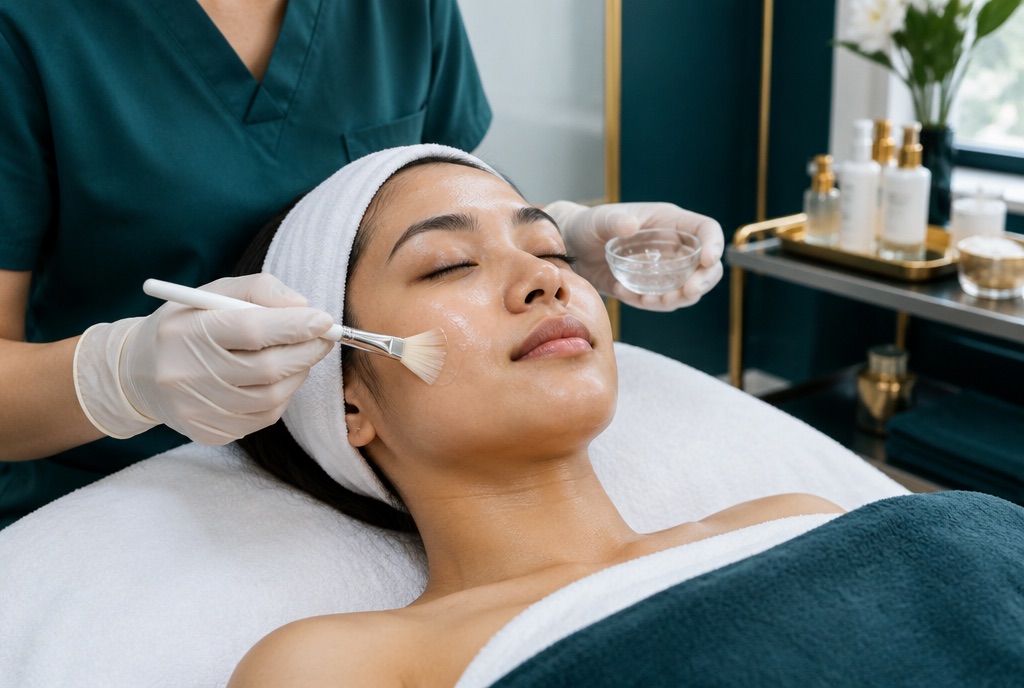
A hydrating or deep-cleansing facial can clear surface buildup and leave skin looking and feeling more hydrated. HydraFacial at Westwood Clinic combines cleansing, exfoliation, extraction and hydration in one session; your therapist can explain each step at your visit.
This kind of treatment may suit you if you are mainly bothered by dullness, dryness or congested skin. Avoid squeezing blackheads yourself, as it can cause infection or scarring; if they keep coming back, an acne treatment plan may do more than repeated extractions.
Expect a cleansing and gentle suction sensation rather than the feeling of a laser. Skin may look flushed or feel sensitive after exfoliation, especially if you already use active products such as retinoids or acids. A hydrating facial cannot erase pitted acne scars or treat every kind of pigmentation.
Not sure which option suits you?
Talk it through at a private assessment with our team.
A chemical peel applies a solution to the skin that removes its outer layers in a controlled way. Depending on its type and depth, a peel may be considered for some types of acne, uneven skin tone, dullness and fine lines. See Westwood’s chemical peel page for the treatment offered there.
Alpha hydroxy acids (AHAs) and beta hydroxy acids (BHAs) are common exfoliating ingredients. After a light peel, redness is usually followed by a few days of flaking. A deeper peel involves a much longer recovery and more aftercare.
Before a peel, tell the clinician about sensitive skin, recent sun exposure, the acne products and retinoids you use, any isotretinoin use, cold sores and previous reactions. Exfoliation that is too strong for your skin can leave dark patches, especially in skin that already marks easily. Follow your specific instructions on moisturising, sunscreen and when to restart active products.
Pico laser is a light-based procedure that may be considered for selected pigment concerns. It is a different kind of face treatment from a cleansing facial; Westwood’s pico laser page is a useful starting point before an assessment.
The first step is identifying the spot. A flat mark left after a pimple is post-inflammatory hyperpigmentation, and it often fades on its own over time. Melasma needs a broader plan built around sun protection. A new, changing or unusual spot should be checked by a doctor before any cosmetic laser treatment.
Laser treatment can cause some discomfort, and the skin may be red or swollen afterwards. Ask about the risk of darker or lighter patches, the recovery time and sunscreen before you decide.
LED light therapy uses visible light, and blue and red light can form part of an acne plan. Red light is also thought to reduce inflammation, and some studies suggest it can bring subtle improvement in fine lines. Westwood’s LED therapy page describes the light colours used; the right colour and goal for you should be agreed at your assessment.
Blue and red light can help treat pimples, but visible light does not clear blackheads, whiteheads, acne cysts or nodules. Changes in fine lines tend to be subtle, so treat LED as one part of a plan rather than a single answer for wrinkles. If early signs of ageing are your main concern, read which anti-ageing facial is right for your skin.
During a session you sit or lie under the light, wearing goggles to protect your eyes. Some people have temporary mild discomfort or irritated skin. Tell the clinician if you take medicines that make your skin more sensitive to light, such as isotretinoin, or have a history of skin cancer or an inherited eye disease.
Microneedling uses fine needles to make tiny punctures in the skin, which stimulates the body to make collagen as it heals. Dermatologists use it to soften acne scars, uneven texture and tone, and fine lines, which is a different job from cleaning pores. Read Westwood’s microneedling page for an overview.
Straight after treatment, skin can look red (or darker on deeper skin tones) and feel like a mild sunburn, with some swelling or burning. If microneedling is not done properly, it can cause infection, scarring or changes in skin colour, so ask about suitability and follow the instructions on cleansing, makeup, active ingredients and sun exposure.
If your main concern is active, inflamed acne, say so before booking. You may call flat dark marks “acne scars”, but they need a different discussion from true indented scars.
Westwood’s W Facial is a multi-step clinic facial: a deep cleanse, gentle exfoliation, masks and serums chosen for your skin, and a soothing massage, finished with a hydrating mask. It may appeal if you want a general refresh or more hydration and would rather begin with a facial than a stronger procedure.
If your skin stings easily or reacts to fragrance or active ingredients, ask which products will be used. A facial may leave skin temporarily pink or sensitive, depending on the steps used. It does not replace a treatment plan for scars, melasma or persistent acne.
There is no fixed schedule that suits everyone. How often depends on the treatment, how your skin responds and whether you are managing a condition such as acne or simply want occasional cleansing and hydration. For a closer look at spacing your visits, see how often you should really get a facial treatment.
With a gentle facial, you can decide on the next visit after seeing how your skin responds. Peels, laser and microneedling have their own intervals and recovery guidance, so don’t apply a salon-facial routine to them. More exfoliation is not automatically better: over-exfoliating can leave skin red and irritated, and it may need a break and a simpler routine. For how clinic facials and your daily routine fit together, see facial treatment vs home skincare.
Between visits, use a cleanser and moisturiser that suit your skin and protect exposed skin from the sun. If pigmentation is a concern, a broad-spectrum sunscreen with SPF 30 or higher, applied every day, is especially important. Ask when you can restart AHA/BHA products or retinoids after a procedure.

Men can choose a facial by skin concern in the same way. If you shave, mention razor bumps, ingrown hairs, irritation or cuts so the exfoliation can be adjusted.
Shaving can irritate the skin and make acne worse; shaving in the direction the hair grows helps prevent razor bumps. Before treatment day, ask whether to shave beforehand and whether a peel or extraction should avoid freshly irritated areas. If your skin is oily or acne-prone, choose cleansers and moisturisers labelled “oil-free” or “non-comedogenic”.
Cost depends on the type of treatment, the assessment involved, the products or devices used, the area treated and the aftercare. A cleansing facial and a procedure such as laser or microneedling involve different steps and resources.
When comparing options, ask for the full proposed plan and what the fee includes. Check whether follow-up visits or additional treatments are recommended before you agree. A lower headline price tells you little about whether the treatment matches your skin concern. Be cautious of promised results or a heavily discounted package offered before your skin has been assessed.
It depends on whether you have blackheads, inflamed pimples or deeper cysts. A gentle cleansing facial, a selected peel or LED light may form part of care, but ongoing acne usually needs a medical treatment plan rather than repeated facials alone.
A facial can clear some visible blackheads through extraction or exfoliation. They can return because oil and dead skin cells build up in pores again. Squeezing them at home can cause infection or scarring.
Base the interval on the treatment and how your skin responds. Ask for a separate schedule if your plan includes a peel, laser or microneedling, and pause exfoliation if your skin becomes irritated.
That depends on the cause. A post-acne mark, a sun-related spot and melasma each need a different assessment. A selected peel or laser may be considered alongside daily sun protection, but no single facial fits every dark spot.
It can be, if the products and steps are chosen with your reactions in mind. Tell the clinician what stings, what you currently use and whether you have a rash, broken skin or sunburn. Exfoliation should wait until broken or sunburned skin has healed.
Beforehand, mention your active products, medicines, recent procedures and any sunburn, and ask whether to pause shaving or exfoliating products. Afterwards, follow the instructions for your treatment, avoid picking at irritated skin and protect it from the sun. More intensive procedures may need a longer break from makeup or active ingredients.
Choose by the problem you want to solve, then check what the treatment can realistically do and how your skin may react. A hydrating facial can help with surface dryness, while acne, scars and pigmentation may need a different plan. Book a skin assessment at Westwood Clinic to talk through your concern and how much recovery time suits you.
Not sure which option suits you?
Talk it through at a private assessment with our team.