
Hair
Women's health
Men's health
Wellness
Hair
Women's health
Men's health
Wellness
Quick answer
Laser facial hair removal can reduce hair on the upper lip, chin and sideburns for months or even years, but on a woman’s face hormones can bring hair back over time, so top-up sessions may be needed. It works most easily on dark hair, and hair that is new, thick or appeared suddenly should be checked by a doctor first.
Yes. The face is one of the areas dermatologists treat with laser, especially the upper lip and chin, according to the American Academy of Dermatology (AAD).
Here is how it works in brief. The dark pigment in the hair absorbs heat from the laser, and that heat damages the hair follicle so it can’t grow hair as before. A follicle only responds while it is in its growth phase, and follicles are in different phases at different times, which is why you need several sessions rather than one.
This article is about women’s facial hair only. For other body areas and a fuller explanation of how laser works, read our full guide to laser hair removal in Malaysia.
On most areas of the body, results from a course of laser last a long time. On a woman’s face they often don’t, and the AAD gives the reason plainly: hormones. The good news is that laser can be repeated when the hair regrows.
When hair does come back after laser, there tends to be less of it, and it is usually finer and lighter than before. Cleveland Clinic explains that treatment is unlikely to catch every hair in its growth phase, so some regrowth is expected. To keep an area clear, you may need maintenance sessions.
So regrowth on your upper lip or chin a while after your course isn’t a sign that the treatment failed. It is how facial hair in women often behaves. It helps to go in expecting long-term reduction and the occasional top-up, rather than hair gone for good.
Thick, dark hair on a woman’s face can be hirsutism, which is usually linked to androgens (“male” hormones). According to the NHS, the most common cause is PMOS, the condition previously called polycystic ovary syndrome (PCOS), which can also cause acne and irregular periods.
The NHS suggests seeing a doctor if you have thick, dark hair on your face, particularly if you’ve also noticed irregular periods. Ask for an urgent appointment if new thick, dark hair suddenly starts growing on your face and body, your voice is getting lower or your muscles are getting bigger.
Lighter, finer hair on the face is probably not hirsutism. Most women get more of this kind of hair as they get older, particularly after menopause.
Laser can reduce the hair, but it doesn’t treat a hormonal cause. Treatments the NHS lists for hirsutism include losing weight if you’re overweight, a prescription cream that slows facial hair growth and, for some women, a contraceptive pill. These are decisions for a doctor, not something to start on your own.
At Westwood Clinic, a doctor assesses every patient before any treatment is suggested, and may recommend checking your hormones first. It helps to mention when the hair started to change and whether your periods have changed too.
Not sure which option suits you?
Talk it through at a private assessment with our team.
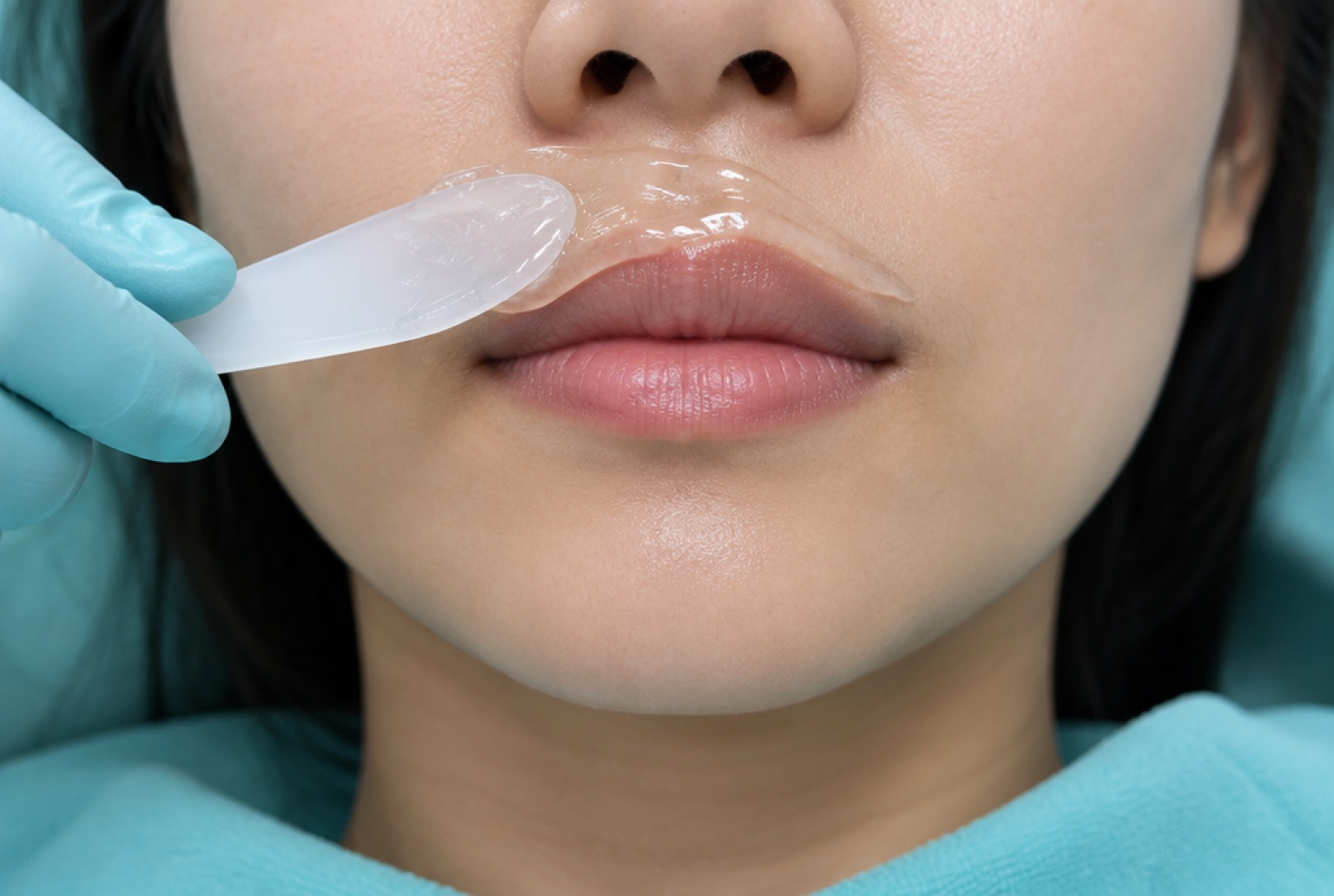
The AAD singles out the upper lip and chin among facial areas, and the sideburns and cheeks are part of the face too. What matters as much as the area is your hair colour.
| Area | What to know |
|---|---|
| Upper lip | Quick to treat: the AAD says it takes minutes. Tell the doctor if you get cold sores. |
| Chin and jawline | If the hair here is thick, dark or new, a hormone check may come first. |
| Sideburns and cheeks | Protective eyewear is worn for every laser session. |
| Fine, light “peach fuzz” | Laser may not work well on blonde, grey, white or red hair. |
If most of what bothers you is soft, pale peach fuzz, ask at your assessment whether laser is likely to help before you commit to a course.
Laser aims for long-term reduction over a course of sessions, while threading, waxing, plucking and shaving remove hair for a shorter time. Cleveland Clinic notes that laser results last longer than shaving, waxing, tweezing or plucking.
| Method | How long results last | Things to know |
|---|---|---|
| Laser | Long-term reduction over several sessions | On a woman’s face, some regrowth is common and top-ups may be needed. |
| Threading, waxing and plucking | Shorter than laser | Once laser treatment starts, avoid waxing, plucking and tweezing on the treated area. |
| Shaving or trimming | Short-term | Shaving the area 2 to 3 days before a session is part of the usual preparation. |
| Hair removal cream | Short-term | One of the home options the NHS lists for unwanted hair. |
| Electrolysis | Longer-lasting | The NHS lists it alongside laser; both have risks and results vary. |
You can read more about how laser compares with other hair removal methods. Because laser results last longer, it can mean less time spent on threading or plucking. If a few stray hairs appear between sessions, ask which quick fix fits your treatment plan.
Most people describe the laser pulses as warm pinpricks or a rubber band snapping against the skin. Treating the upper lip takes only minutes.
Before your session, Cleveland Clinic advises:
On the day, the skin is cleansed first. A numbing gel may be used on a small, sensitive area, and the AAD notes it takes about 30 to 60 minutes to work. Everyone in the room wears protective eyewear during the procedure.
Afterwards, the treated skin will look red and swollen, often like a mild sunburn, and a cool compress can ease the discomfort. Most people go back to their everyday activities, so you may want to plan for a little redness on the day.
The most common side effects are discomfort, swelling and redness, and the AAD says they usually last 1 to 3 days. Less common effects include blistering, cold sore outbreaks, infection, scarring and lighter or darker patches of skin.
Skin colour changes usually return to normal with time, but some don’t. This is one reason the AAD stresses having laser done by a medical doctor skilled in lasers: in inexperienced hands it can cause burns, lasting colour changes and scars. Following the before and after instructions also lowers the risk.

Sun protection matters in Malaysia, where it’s easy to catch sun on the drive or walk to work. After treatment, keep direct sunlight off the treated skin and avoid any tanning.
Skin tone counts too. Laser works most easily when dark hair contrasts with lighter skin. People with darker skin can be treated today, but the AAD says treatment must be done very carefully. For more on skin types, see the guide linked above.
Cleveland Clinic advises talking to your provider first, or avoiding treatment, if you:
You’ll need a series of sessions, because laser only works on follicles in their growth phase and they don’t all grow at once. Both the AAD and Cleveland Clinic say to expect several treatments spaced weeks apart, although their exact figures differ.
The AAD says most people can have a session once every 4 to 6 weeks. Both sources say you can expect roughly a 10% to 25% reduction in hair after the first treatment. On the face, plan for maintenance sessions later, because hormones can bring hair back.
Your doctor will set the plan after looking at your hair, your skin and your history. You can read about laser hair removal at Westwood Clinic before booking an assessment.
Home laser devices exist, but Cleveland Clinic warns that without supervision from an experienced healthcare provider, the risk of misuse or injury goes up. If you do use one, protective eyewear is essential.
A home device can’t tell you whether your facial hair has a hormonal cause. If the hair is new, thick or growing quickly, see a doctor before you start treating it yourself.
The cost depends mainly on how much of your face is treated and how many sessions you need. A lip-only plan and a full-face plan are very different.
Other things that affect the total:
When you compare quotes, ask exactly what the fee covers and whether follow-up sessions are included.
It gives long-term reduction, and many people stay hair-free for months or even years. On a woman’s face, hormones can bring hair back, so top-up sessions may be needed. Regrowing hair is usually finer and lighter.
There’s no fixed number for the upper lip alone. Laser hair removal generally takes a series of sessions spaced weeks apart, and the AAD says most people can be treated once every 4 to 6 weeks. Your doctor will plan your course after seeing your hair and skin.
Redness, swelling and discomfort are the most common, usually lasting 1 to 3 days. Less often, there can be blistering, cold sore flare-ups, infection, scarring or lighter or darker patches. If you get cold sores, tell the doctor before treatment.
Not as well. Laser relies on pigment in the hair, so it may not work well on blonde, grey, white or red hair. Ask at your assessment whether your hair is likely to respond.
Cleveland Clinic advises avoiding waxing, tweezing and plucking on the treated area once treatment has started. Shaving is different: Cleveland Clinic advises shaving the area two to three days before each session. Ask your doctor how to handle stray hairs between visits.
Laser can reduce the hair, but it doesn’t treat the hormonal cause. PMOS, previously called PCOS, is the most common cause of hirsutism, according to the NHS, so see a doctor about the underlying condition as well.
People with darker skin can have laser hair removal, but the AAD says it must be done very carefully. Laser may not work as well on darker skin, and burns or colour changes are possible in inexperienced hands, so ask about the risks for your skin before you start.
Laser can mean less threading, plucking and waxing on your upper lip, chin or sideburns. On a woman’s face, expect some regrowth over time and plan for the occasional top-up. If your facial hair is new, thick or came on suddenly, have it checked by a doctor first. When you’re ready, book an assessment at Westwood Clinic to talk through your hair, your skin and a realistic plan.
Not sure which option suits you?
Talk it through at a private assessment with our team.