
Hair
Women's health
Men's health
Wellness
Hair
Women's health
Men's health
Wellness
Quick answer
Laser hair removal can give long-term hair reduction, but it cannot promise that every hair will stay away forever. Most people need several sessions, and some need maintenance when hair grows back.

A hair-removal laser sends a focused beam of light towards pigment, or melanin, in the hair. The light becomes heat and damages the hair follicle, the small pocket in the skin where hair grows. This slows future growth. Dark hair usually responds most readily because it contains more pigment; blonde, white and grey hair have less pigment and are harder for the laser to target.
Hair follicles do not all grow at the same time. Laser works on hair in its active growth phase, called anagen, which is why treatment is planned as a series rather than a single visit. Treated hair usually sheds over several days to weeks, so the result isn’t obvious as soon as you leave the clinic.
There are different laser types and settings, including the diode laser. A diode device uses a particular wavelength of light, but its name alone does not show whether it suits you. Explore hair-removal options before your assessment.
It is more accurate to expect long-term hair reduction than the disappearance of every hair forever. After a course of treatment, many people see little or no hair on the treated skin for several months or even years, but some hair can return. When it does, it tends to be finer and lighter, and a maintenance session may be worth discussing.
Results differ by body area, hair colour, skin tone and hormones. Hormone-related conditions such as PCOS can cause extra hair to grow, and laser may reduce existing hair without treating the reason new hair is appearing. If facial growth has changed suddenly or comes with other symptoms, mention that at your assessment. For pale hairs that laser cannot target well, ask whether electrolysis is an option.
Most people need several treatments because hair moves through different growth phases. The American Academy of Dermatology says most patients need 2 to 6 treatments, usually every 4 to 6 weeks; Mayo Clinic says most people need 4 to 8 treatments, spaced several weeks apart. Treat these as general guides, not a schedule for everyone.
Your plan depends on the area, hair colour and thickness, skin type and hormones. Ask when to return and what changes are realistic to expect.
Not sure which option suits you?
Talk it through at a private assessment with our team.
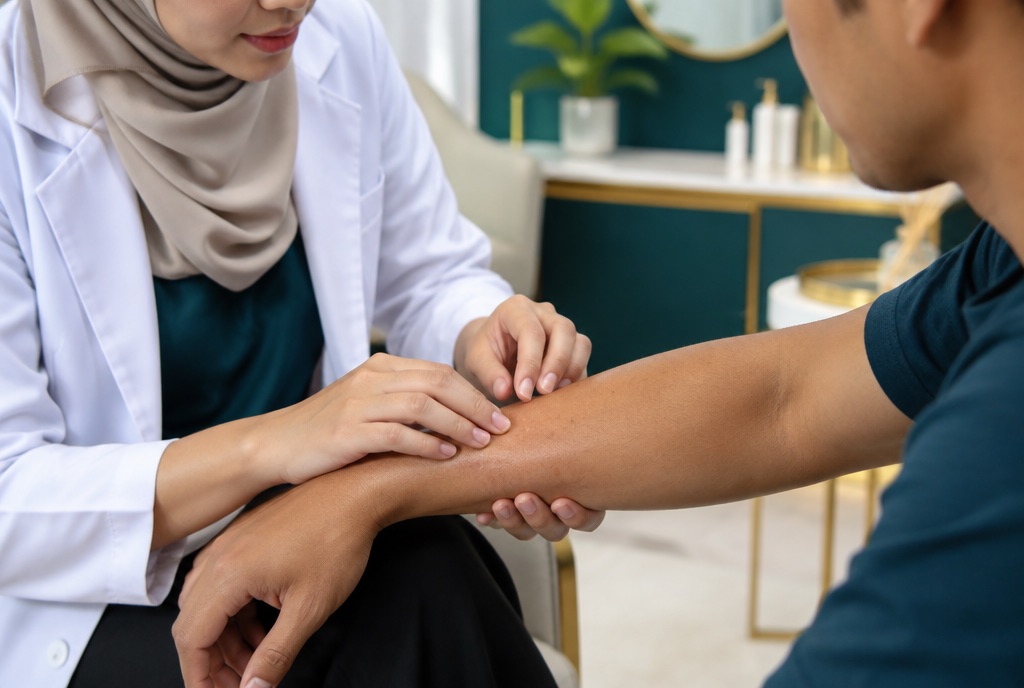
People with medium to darker skin tones can have laser hair removal, but skin tone changes the safety decisions. Darker skin contains more melanin, the same pigment the laser targets in hair, so the right type of laser and the right settings matter. If too much energy is absorbed by the surrounding skin, burns or changes in skin colour can occur.
Ask for an assessment of your skin tone, hair and recent sun exposure. A patch test treats a small area first to check how your skin and hair react before a larger area is treated. Experience with your skin tone matters more than a claim that one device works for everyone.
Diode laser hair removal is one option you may hear about; you can read Westwood’s diode hair-removal information before your visit. Tell the clinic if you tan easily, develop dark marks after irritation, or have reacted to light-based treatment.
Many people describe each pulse as a warm pinprick or a rubber band being snapped against the skin. The feeling varies with the area, the person’s sensitivity and the treatment settings, so underarms or a bikini line may feel different from legs or a back. Many lasers have built-in cooling, and a cooling gel may also be used to make treatment more comfortable.
Redness, swelling and discomfort are common after treatment and are usually temporary. Less common problems include blistering, cold sore outbreaks, infection, scarring and skin becoming lighter or darker. Skin colour usually returns to normal in time, but some colour changes can be permanent, and the risk is higher on brown and black skin and when the sun isn’t avoided before and after treatment.
Tell the clinician about a recent tan, skin irritation, a history of scarring or cold sores, and all medicines or skin products you use. Some medicines and skin conditions can change whether or when treatment is appropriate. A recent tan may mean waiting until the skin has returned to its usual colour.
If you are pregnant or breastfeeding, tell the clinic. Hormone changes at these times can change how your skin and hair respond to laser, so discuss with your clinician whether to go ahead now or wait.
Everyone in the room should wear protective eyewear during treatment. Laser should not be used on the eyelids, eyebrows or the area around them because of the risk of serious eye injury. If you develop blistering or a strong skin reaction afterwards, contact the treating clinic for advice.
These methods do different jobs. Laser and IPL aim to reduce growth over time; waxing removes hair from the root for a shorter period, while shaving cuts it at the skin surface. The right choice depends on your hair, skin, tolerance for repeat upkeep and what matters most to you.
| Method | How long results last | Good for | Things to know |
|---|---|---|---|
| Laser | Reduction may last months or years; regrowth and maintenance are possible | People wanting less repeat shaving or waxing | Needs a series and careful settings for your skin tone |
| IPL (intense pulsed light) | Reduction varies; upkeep may be needed | People considering another light-based option | Uses broad-spectrum light rather than a focused laser beam; ask about suitability for your skin tone |
| Waxing | Usually lasts longer than shaving, but hair grows back | People who prefer hair removal without light-based treatment | Can irritate skin; stop waxing before a laser course as instructed |
| Shaving | Short-lived; repeat as hair grows | Quick upkeep at home | Cuts hair at the surface and may cause razor bumps or ingrown hairs for some people |
Underarms: A common choice for people tired of frequent armpit shaving. The skin may feel sensitive after treatment, so ask when to resume deodorant or exercise.
Legs: A larger area takes longer to treat than underarms. Sun exposure is worth discussing, especially if your legs are often uncovered outdoors.
Bikini area: Agree on the exact area and ask about privacy and comfort before treatment.
Face: Upper lip and chin hair can be treated, but hormone-related growth may continue to appear. Fine, pale facial hair may respond poorly, so ask whether the hair is a suitable target.
For men: Back, chest and beard-line hair are common treatment areas. If the aim is to reduce razor bumps rather than remove every beard hair, say so during planning; the intended shape and density matter.
Full body: Ask exactly which areas are included and assessed.
The size and number of areas, the planned number of sessions, and your hair and skin characteristics all affect the treatment plan. A small upper-lip area and a larger back or full-body plan are different commitments. An assessment should establish the treatment areas and plan; the team can then explain the options at your consultation.
Ask what is included and whether maintenance may be needed. Be cautious of unlimited-session packages that skip a skin assessment or leave the treated areas unclear.
Before treatment, tell the clinic about medicines, skin products, tanning and any previous laser reaction. You will usually be asked to shave the area shortly before your session but avoid waxing, plucking or hair-removal creams, because the hair needs to be in the follicle for the laser to target it. Follow the clinic’s timing instructions, because preparation can differ by area and device.
Avoid sun exposure and tanning before your appointment, and use a broad-spectrum sunscreen on exposed skin as advised. After treatment, follow the clinic’s care instructions. Treated skin may be more sensitive, so avoid rubbing it or applying irritating products while it settles.
NHS guidance for laser hair reduction advises avoiding getting hot and sweaty for 24 hours after treatment, such as the gym or a sauna; your clinician may advise longer for your skin. Ask when you can shave again and what reaction would warrant a call. If a blister, marked colour change or worsening pain develops, contact the clinic rather than trying to treat the area yourself.
It can substantially reduce growth for a long time, but it does not assure that every hair is gone forever. Some people need maintenance, and hair may regrow finer or lighter. Ask what outcome is realistic for the area you want treated.
Most people need a series because follicles are at different growth stages. The American Academy of Dermatology says most patients need 2 to 6 treatments and Mayo Clinic says 4 to 8, so your number may differ. Your plan should be reviewed against how you respond.
It can be an option for darker skin when the laser and settings are chosen carefully by an experienced professional. The wrong approach raises the risk of burns or pigment changes. Ask about a skin assessment, a patch test and experience with your skin tone.
Tell your clinician if you are pregnant, might be pregnant or are breastfeeding. Hormone changes can alter how your skin and hair respond, so talk through whether to start now or wait until later.
It often feels like warm pinpricks or a rubber band snapping against the skin, but discomfort varies by person and area. Cooling may help. Tell the clinician if you feel unexpected or intense pain during treatment.
Laser may suit someone who wants long-term reduction, while waxing removes hair for a shorter time and must be repeated. Neither is automatically the right choice for everyone. If you plan laser sessions, ask when to stop waxing beforehand.
Laser hair removal may reduce the time you spend managing unwanted hair, but the result and the experience vary. A skin and hair assessment is the place to ask about your likely response, possible side effects and the plan that makes sense for you. If you would like to discuss laser hair removal at Westwood Clinic, book a skin assessment at our clinics in the Klang Valley. Bring your questions, including any concerns about darker skin, pregnancy or previous skin reactions.
Not sure which option suits you?
Talk it through at a private assessment with our team.