
Hair
Women's health
Men's health
Wellness
Hair
Women's health
Men's health
Wellness
Quick answer
The difference between a skin specialist and a dermatologist comes down to how strictly the words are used. A dermatologist is a medical doctor who specialises in conditions of the skin, hair and nails, while “skin specialist” is an everyday phrase people often use to mean a dermatologist, and that listings and ads also use more loosely.
So the useful question isn’t the label. It’s who will actually examine you, and whether your concern is medical or cosmetic.
Often people mean the same thing, but not always. Every dermatologist is a skin specialist in the everyday sense, but not everyone described as a “skin specialist” is a dermatologist.
You’ll see the two words used for the same doctor even by health services. The NHS, for example, writes “skin specialist (dermatologist)” in its advice on acne. But the phrase “skin specialist” on a signboard, a search listing or a social media ad doesn’t tell you what training the person has.
If it matters for your concern, simply ask when you book: “Is the doctor a dermatologist?”

A dermatologist is a medical doctor who diagnoses and treats conditions of the skin, hair and nails, and cares for people of all ages. Dermatologists also help with cosmetic concerns.
Becoming a dermatologist takes many years of education and training. The kinds of problems dermatologists see include:
A skin condition is sometimes a sign of a serious underlying health issue, which is one reason a proper diagnosis matters. Skin conditions can also affect quality of life, for example through lost sleep or a poor self-image.
Besides dermatologists, the people you’re likely to come across are GPs, aesthetic doctors and beauty therapists. They do quite different jobs.
General practitioner (GP). A GP can help with common skin problems such as acne, offering treatment and advice, prescribing stronger treatment or referring you to a dermatologist. The NHS also advises seeing a GP about a mole that has changed or looks unusual.
Aesthetic doctor. An aesthetic doctor is a medical doctor who focuses on cosmetic concerns such as pigmentation, acne marks or signs of ageing. They aren’t a dermatologist unless they have gone on to specialise in dermatology. In Malaysia, the Ministry of Health says a practitioner carrying out aesthetic medical procedures must be a registered medical practitioner holding a Letter of Credentialing and Privileging (LCP), and the procedure must be done at premises registered with the Ministry.
Beauty therapist or facialist. A beauty therapist offers treatments such as facials and skin care, but isn’t a medical doctor. Prescription treatments, for acne for example, come from a GP or dermatologist, so a skin problem that needs a diagnosis or medicine should go to a doctor.
Dermatologist. As above: a medical doctor who specialises in the skin, hair and nails, covering both medical conditions and cosmetic concerns.
For a fuller comparison and how to check a doctor’s registration in Malaysia, read dermatologist, aesthetic doctor or GP: who does what in KL, and how to check a doctor.
Not sure which option suits you?
Talk it through at a private assessment with our team.
Both are medical doctors, but a dermatologist specialises in diagnosing and treating skin, hair and nail conditions, while an aesthetic doctor focuses on cosmetic concerns. Here’s a simple side-by-side:
| Question | Dermatologist | Aesthetic doctor |
|---|---|---|
| Who they are | A medical doctor who specialises in the skin, hair and nails | A medical doctor who focuses on cosmetic concerns |
| Main focus | Diagnosing and treating skin, hair and nail conditions, plus cosmetic concerns | Cosmetic concerns such as pigmentation, acne marks and signs of ageing |
| A skin disease or a suspicious mole | Diagnosis and treatment are core to their work | A medical problem should go to a GP or dermatologist first |
| Examples of what to see them for | A rash, eczema, psoriasis, acne that isn’t improving, hair loss, a changing mole | Dark spots, uneven tone, acne marks or fine lines, once medical causes are ruled out |
Yes. Dermatologists help with cosmetic concerns such as wrinkles, sagging skin and scarring caused by acne, as well as diseases of the skin, hair and nails.
There’s a useful safety point here too. Seeing a doctor for a cosmetic concern helps make sure it really is cosmetic. What looks like an age spot could be a skin cancer, and removing a skin cancer the way you would an age spot can allow it to grow and possibly spread.
Match who you see to your concern: medical problems go to a GP or dermatologist, while purely cosmetic concerns can go to a doctor who assesses your skin first. This table is a simple starting point:
| Your concern | Who to see first |
|---|---|
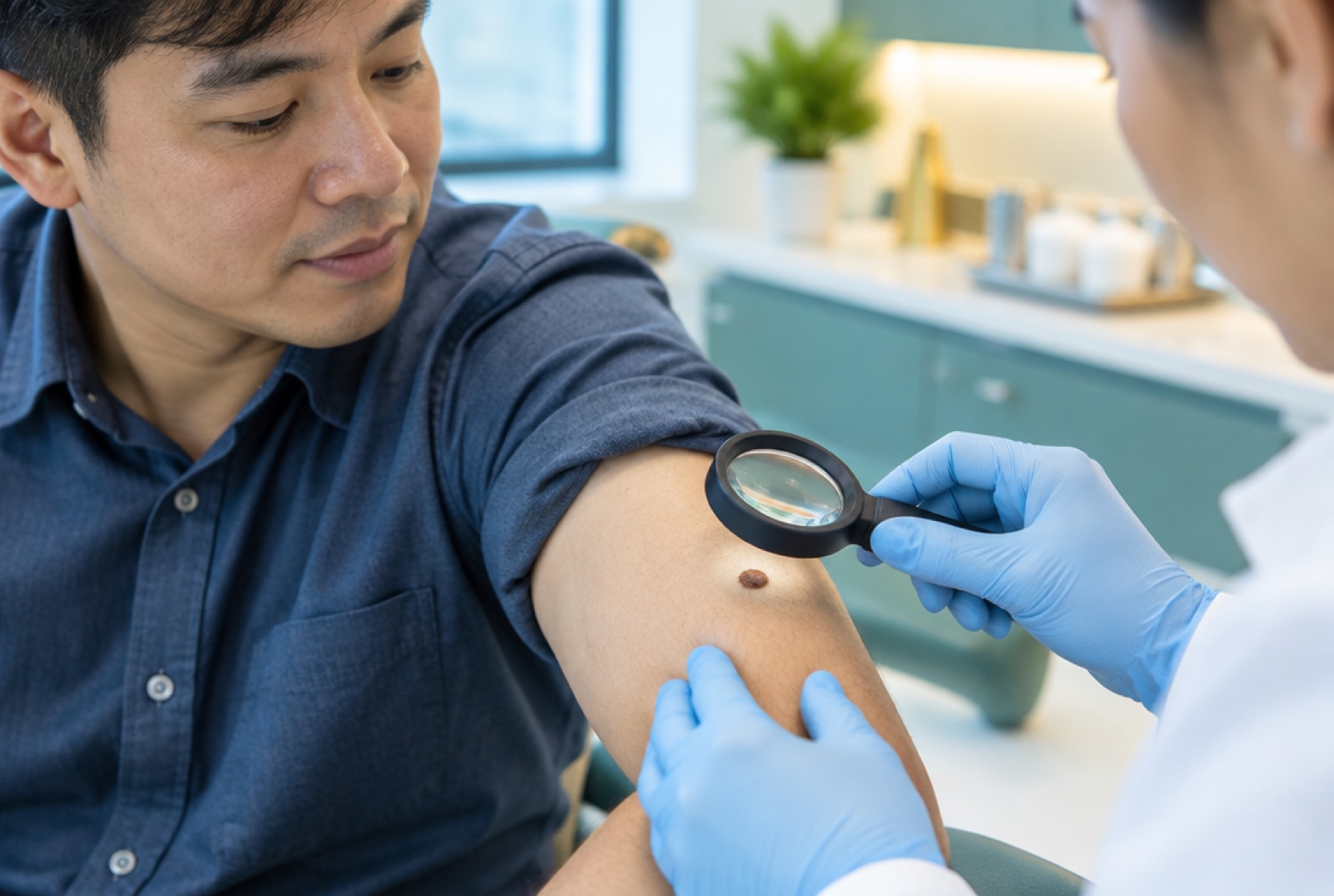
| A mole that has changed size, shape or colour, or is painful, itchy, inflamed, bleeding or crusty, or a new or unusual mark that hasn’t gone away after a few weeks | A GP or dermatologist. Don’t book a cosmetic removal first. |
| Acne that isn’t getting better with self-care, or spots that are many, deep, painful or causing scars | A GP, who may prescribe treatment or refer you to a dermatologist |
| A rash, eczema or psoriasis that isn’t settling | A GP or dermatologist |
| Hair loss or nail changes you can’t explain | A GP or dermatologist, to look for the cause |
| Dark spots, uneven tone, acne marks or early signs of ageing, with no medical problem | An aesthetic clinic where a doctor assesses your skin first, or a dermatologist |
| Not sure | A GP, who can refer you if needed |
If you have a specific concern in mind, see a concern-by-concern guide to skin care in KL.
If you’re not sure what you need, a GP is a sensible place to start. For acne, for example, the NHS says a GP may offer treatments you can only get with a prescription, or refer you to a dermatologist.
How referrals work depends on where you go, so ask the clinic or hospital what they need from you. If you plan to claim on insurance, check with your insurer before you book.
Check three things: the procedure, the practitioner and the premises. Malaysia’s Ministry of Health calls this the “3P” check for aesthetic procedures, and it’s a sensible habit wherever you go.
For practical checks before you visit somewhere nearby, read how to choose a skin clinic near you.
Often people use the words to mean the same doctor, but not always. A dermatologist is a medical doctor who specialises in the skin, hair and nails. “Skin specialist” is a looser everyday phrase that ads and listings also use, so it’s worth asking who will see you.
Not necessarily. “Skin doctor” is an everyday phrase, and it can refer to a dermatologist, a GP who sees skin problems or an aesthetic doctor. If you need a dermatologist, ask directly when you book.
Not unless they’ve gone on to specialise in dermatology. An aesthetic doctor is a medical doctor who focuses on cosmetic concerns. The words on a signboard or in an ad don’t tell you which one you’re seeing.
Dermatologists help with cosmetic concerns, including scarring caused by acne, as well as medical skin conditions. A doctor’s assessment also helps make sure a dark spot really is harmless before it’s treated, because what looks like an age spot could be a skin cancer.
A beauty therapist can offer facials and skin care, but isn’t a medical doctor and can’t give you prescription treatment. If your acne isn’t getting better with self-care, or your spots are many, deep, painful or causing scars, see a GP.
See a GP or dermatologist if a mole has changed size, shape or colour, or if it’s painful, itchy, inflamed, bleeding or crusty. The same goes for a new or unusual mark that hasn’t gone away after a few weeks. Finding a melanoma as early as possible can mean it’s easier to treat, so have it checked before thinking about cosmetic removal.
A dermatologist is a medical doctor who specialises in the skin, hair and nails, while “skin specialist” is a phrase that gets used loosely. Rather than going by the label, match who you see to your concern. A medical problem goes to a GP or dermatologist, and a cosmetic concern goes to a doctor who assesses your skin first.
Westwood Clinic is an aesthetic clinic. If your concern is cosmetic, such as pigmentation or acne marks, you can book a consultation to talk through options such as pico laser for pigmentation at Westwood Clinic. A medical problem, such as a changing mole or a rash that won’t settle, should go to a GP or dermatologist first.
Not sure which option suits you?
Talk it through at a private assessment with our team.