
Hair
Women's health
Men's health
Wellness
Hair
Women's health
Men's health
Wellness
Quick answer
Pico laser recovery usually means some redness, warmth or swelling for a short time, and a treated spot may look darker or form a small crust before it fades. Results tend to build gradually, often over more than one session, and how much improvement you see depends on your skin concern and skin type. If you are considering pico laser treatment, ask what recovery is likely to look like for your own skin before you pick a date.
For many people, the visible recovery is a matter of days rather than weeks, though it varies. Redness and swelling are common after many laser treatments and are usually mild, fading within a few hours or by the next day. Crusting or temporary darkening of treated spots tends to fade quickly too. Your clinic should tell you what to expect for your treatment.
A picosecond laser delivers energy in extremely short pulses, measured in picoseconds (trillionths of a second). Pigment lasers like this target melanin, the pigment that gives skin its colour. They break the pigment up, and the body then clears the fragments gradually over several weeks.
That is different from ablative resurfacing lasers, which remove the outer layer of skin and can need a week or more to heal. “Pico” describes how short the pulse is. It doesn’t tell you how your skin will react, so settings, the area treated and your skin type still matter.
Think in stages rather than a fixed pico laser recovery day-by-day calendar. The concern being treated, the settings, the size of the area and your skin type can all change what you see. Timelines vary, so use this as a rough guide and follow the plan your clinic gives you.
| Stage | What you might notice | What to do |
|---|---|---|
| Straight after treatment | Skin may feel warm, stinging or tender and look red or swollen. With some pigment laser treatments, the treated area turns white for a while (“frosting”) or bruises. | Ask which changes are expected for your treatment and follow the cooling and care advice you’re given. |
| The first day or two | Redness and swelling usually settle within hours or by the next day. A treated dark spot may look darker for a while. | Protect the area from the sun and call your clinic if things are getting worse rather than settling. |
| The following days | A treated spot may form a crust. Don’t pick or scratch it, as this can cause scarring or infection. | Keep to gentle cleansing and the products your clinic recommends. |
| The following weeks | The broken-up pigment is cleared gradually over several weeks, so changes become easier to judge. | Compare photos taken in similar light and discuss the response before your next session. |
Not everyone crusts or peels, and some people have almost no visible change. Still, leave some room before a big event in case your skin reacts more than expected.
Redness after laser treatment is usually mild and often fades within a few hours or by the next day. There’s no single duration that fits every pico laser treatment, though, because the settings and the concern being treated differ.
Resurfacing lasers are a different story: after that kind of treatment, redness can last for months. That gap is why you should ask about the exact treatment planned for you. If redness is spreading or getting worse instead of fading, contact your clinic.
Not sure which option suits you?
Talk it through at a private assessment with our team.
Results are usually judged after the skin has settled, and they often build over a course of treatments. The fragmented pigment is cleared by the body over several weeks, so the change is gradual rather than immediate.
You might notice a spot lightening after one session, but that isn’t something anyone can promise. Some marks respond slowly, and some may not respond or may come back. A spot that looks darker in the first days is not automatically a failed result, since temporary darkening is a known reaction.
Keep pigment and texture separate in your mind. A treatment aimed at a flat dark mark won’t necessarily smooth a sunken acne scar.
There’s no fixed number that fits everyone. The plan depends on what the mark is, how deep the pigment sits, your skin type and how your skin responds, and your doctor should set it after assessing you.
Some guidance gives a sense of range for particular concerns. For age spots, one or two laser treatments can be enough. Acne scar treatment is rarely one and done, and three or more treatments are often needed. Melasma usually needs a broader plan than laser alone.
It helps to ask whether the goal is to lighten one spot, even out a wider area or manage a condition that tends to recur. Ask, too, what would make your doctor change the plan.
“Pigmentation” covers several different conditions, and they don’t respond in the same way. Getting the diagnosis right comes before any laser plan.
Sun spots (solar lentigines, often called age spots) can respond to laser treatment, but they can return with sun exposure, so sun protection matters after treatment. Something that looks like an age spot could be skin cancer, so have any new, changing or unusual spot examined before it is treated as a cosmetic concern.
Flat brown marks left after a pimple heals are usually post-inflammatory hyperpigmentation (PIH). They’re common in medium to darker skin tones. Once the acne is under control, most of these marks fade on their own over time, though it can take many months. Treatment can speed up the fading, but new breakouts can leave new marks, so treating the acne and using sunscreen daily matter as much as any laser.
Melasma can be stubborn and can return. The American Academy of Dermatology notes that adding a laser or light treatment can improve results for people who are already using medication on their skin and protecting it from the sun, so laser is an add-on rather than a stand-alone answer. Lasers can also cause darkening after the procedure, and sun and heat can make melasma worse. See our pigmentation and melasma page when you’re weighing your options.
Atrophic acne scars are sunken areas of skin, not just dark marks. Treatments for sunken scars work by helping the skin make more collagen and elastin, and that remodelling takes time. It can take months to see results, with little change at first. Laser can make a scar less noticeable, but it can’t make it disappear. Ask whether the plan addresses colour, depth or both.
It can be an option, but medium to darker skin needs careful assessment. Darkening of the treated skin (hyperpigmentation) is the most common risk of pigment laser treatment, and it’s more likely in people who tan easily or have darker skin. Lighter patches (hypopigmentation) can also occur.
Darkening after pigment laser treatment usually fades over several months, and lighter patches usually fade within a few weeks, though rarely they don’t fade. Neither your ethnicity nor your skin type can predict exactly how you’ll heal.
Before treatment, tell your doctor about past dark marks after pimples or injuries, recent tanning and any melasma. Laser treatment can’t be done over a tan or sunburn, so plan your sun exposure in the weeks before, too.
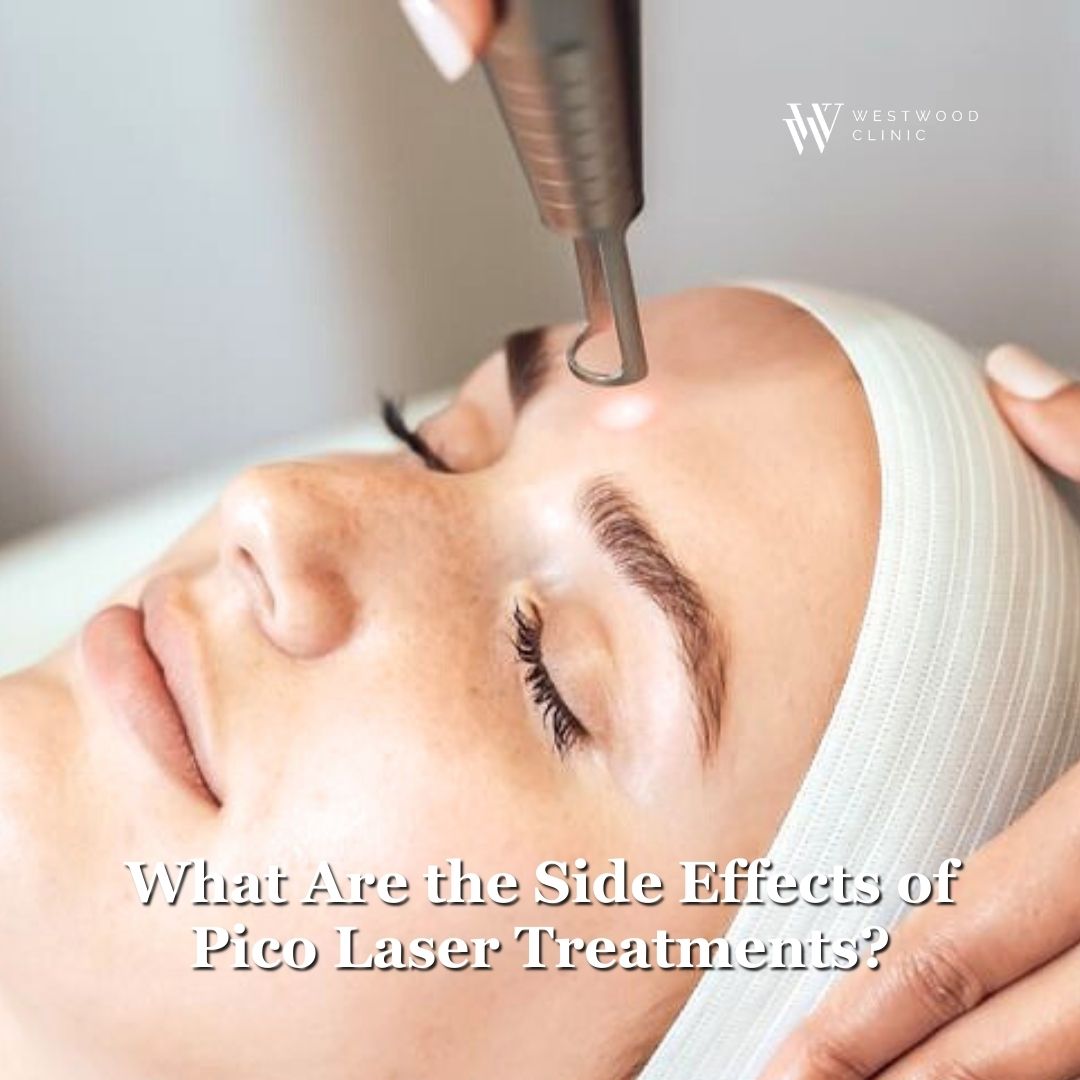
Common, usually short-lived effects include redness, swelling, a stinging or burning feeling, temporary darkening of treated spots and small crusts. Less common problems include lingering pain, burns, blisters, infection, scarring, and darker or lighter patches that last for months.
If you’ve had cold sores before, say so, because laser treatment can trigger a cold sore in people who get them. Contact your clinic if you notice blisters, pain that is getting worse, anything that looks infected, or a change you weren’t told to expect. Don’t rely on social media photos to decide whether a reaction is normal. The people who treated you know your settings and can check.

Follow the instructions your clinic gives you for your treatment. The basics are simple:
For the full routine, read our pico laser aftercare do’s and don’ts. If your own instructions differ, follow the plan you were given.
It depends on the treatment and how your skin reacts. For many people, redness and swelling settle within hours or by the next day, and crusting or darkening of treated spots tends to fade quickly. Ask your clinic what to expect for your area and settings.
Most people can go home straight after pigment laser treatment and carry on with normal activities. Visible redness, darkening or small crusts may make you less comfortable at work or social events, so leave some flexibility if appearance matters that week.
You may notice a spot lighten after one session, but no one can promise it. Pigment is cleared gradually over weeks, so wait for your skin to settle and compare photos taken in similar light before judging.
There’s no set number. Melasma usually needs a broader plan built on skin treatment and daily sun protection, with laser as a possible addition, and it can return. Have the diagnosis and risks reviewed before committing to a course.
It can. Darkening of the treated skin is the most common risk of pigment laser treatment, and it’s more likely if you tan easily or have darker skin. Lighter patches can also happen. Tell your doctor about your skin tone, past reactions and any melasma before treatment.
That depends on what was treated and whether the cause is still there. Age spots can return with sun exposure, melasma can come back, and new acne can leave new marks. Daily sun protection and treating the underlying cause help results hold.
Expect a process, not a reveal date. Mild redness or darkening often comes first, and results become clearer over the following weeks and, for many concerns, over more than one session.
If you’d like to explore pico laser at Westwood Clinic, book an assessment and bring your questions about recovery time, pigment changes and realistic goals. Your plan should be based on your skin as it is today, with a review of how it responds before any further treatment.
Not sure which option suits you?
Talk it through at a private assessment with our team.