
Hair
Women's health
Men's health
Wellness
Hair
Women's health
Men's health
Wellness
Quick answer
Stretch marks are very common, harmless lines that form when the skin stretches or shrinks quickly. They usually fade over time but may not disappear completely. Treatment can make them less noticeable, but no treatment gets rid of them entirely.
Stretch marks, or striae distensae, are a type of scar that forms when the skin stretches or shrinks quickly. The sudden change damages the collagen and elastin in the dermis, the middle layer of the skin that gives it strength and stretch, and stretch marks may appear as the skin heals.
New marks, called striae rubrae, tend to be red, purple, pink, reddish-brown or dark brown, depending on your skin colour. They may feel slightly raised and can be itchy. Over time the colour fades and the marks sink a little below the surface. These older marks, called striae albae, usually look white or silver, and you can often feel a slight dip if you run a finger over them.
Stretch marks are most common on the tummy, breasts, hips, thighs, bottom, upper arms, chest and back. A C-section scar is a surgical scar rather than a stretch mark, though both can sit on the lower belly, so ask a clinician to look at the area if you’re unsure which is which. You can also see Westwood Clinic’s stretch mark treatment page for the options offered there.
Stretch marks are most likely to appear during pregnancy, growth spurts in puberty, rapid weight gain or loss, and weight training that builds muscle quickly. Hormone changes seem to play a part, and you are more likely to get them if other people in your family have them.
So yes, stretch marks after the gym can happen when muscles grow quickly. Rapid weight loss is a recognised cause too, because skin that shrinks quickly is also affected. Teenagers commonly develop them during ordinary growth.
Using some kinds of steroid creams or tablets can also cause stretch marks, especially a steroid cream applied for a long time. Rarely, they are linked to a condition called Cushing’s syndrome. See a doctor if you have large stretch marks along with weight gain on your chest and tummy but slim arms and legs, a build-up of fat at the back of your neck and shoulders, or a red, puffy, rounded face.
Stretch marks usually fade over time, but they may not disappear completely. Newer red or purple marks gradually lose their colour; older white or silver marks tend to stay as pale, slightly sunken lines. How much they fade varies from person to person.
Stretch marks don’t cause medical problems, so if they don’t bother you, you don’t need to treat them. If you would like to, a clinician can tell you which options suit you based on your health, your skin and how long you’ve had the marks.
Not sure which option suits you?
Talk it through at a private assessment with our team.
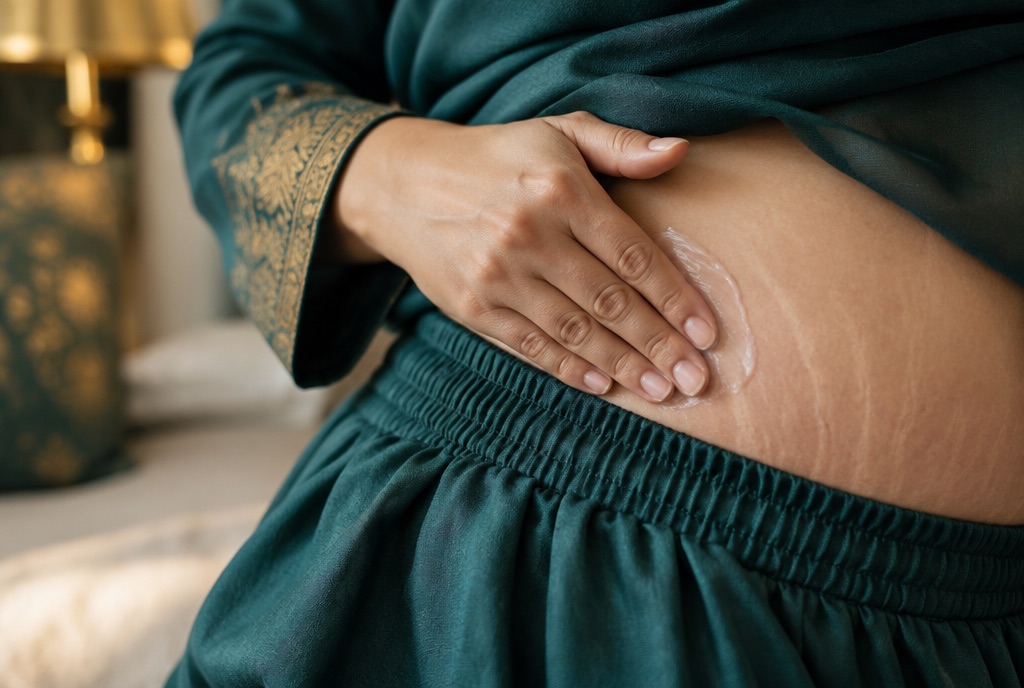
Many creams and lotions claim to prevent, reduce or remove stretch marks, but there is very little evidence that they work. In studies reviewed by the American Academy of Dermatology (AAD), none of the stretch marks faded when people massaged almond oil, cocoa butter, olive oil or vitamin E into them, and these remedies didn’t prevent stretch marks either. A moisturiser can still help keep your skin soft, but it won’t get rid of the marks.
Two ingredients have some evidence for newer marks. The AAD reports that hyaluronic acid and prescription tretinoin, a retinoid, may make early stretch marks less noticeable. Topical products seem to have little effect on mature marks, and any results take weeks of daily use to appear.
Retinoids need special care around pregnancy. The NHS advises not to use retinoid creams if you’re pregnant, as they may harm your baby. If you’re pregnant or breastfeeding, the AAD advises checking with your doctor before treating stretch marks, because some products contain ingredients such as retinol that can harm your baby.
For stretch mark treatment at home, keep expectations modest: moisturiser for comfort, gentle skin care and time. Avoid tanning, as stretch marks don’t tan and can become more noticeable. Don’t try to puncture the marks with an at-home microneedling device; pressing too hard or piercing the skin can lead to infection, scarring or changes in skin colour.
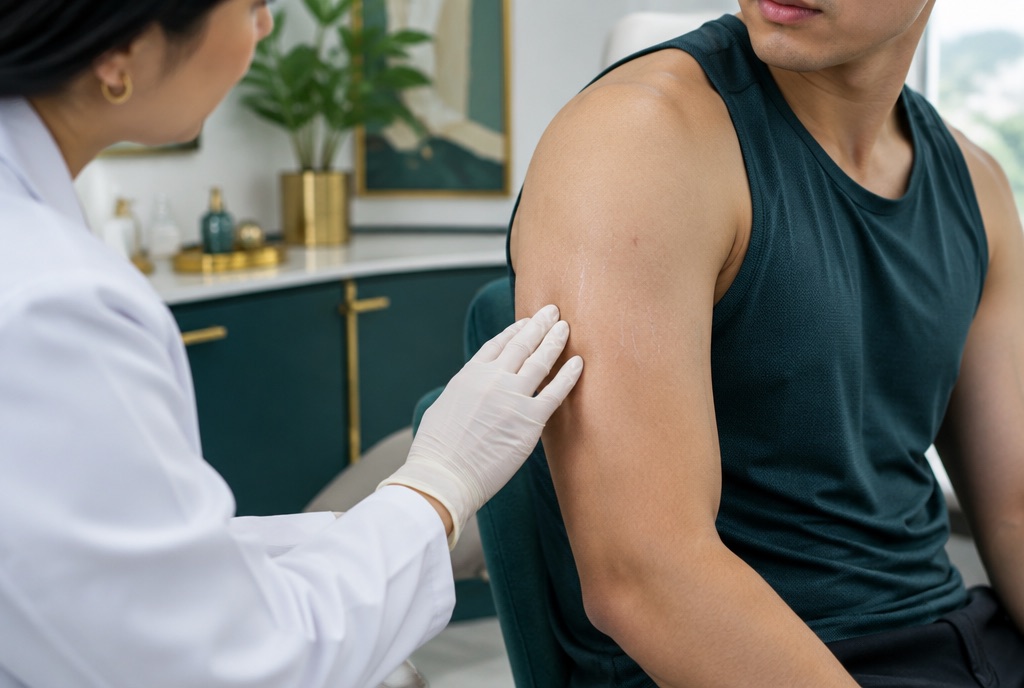
Clinic procedures can make stretch marks less noticeable, but none of them can get rid of stretch marks completely. No single treatment works for everyone, and newer and older marks often call for different approaches. Starting treatment while marks are still new tends to give better results; older, deeper marks are harder to improve.
Microneedling uses tiny needles to make controlled punctures in the skin, which stimulates the body to make new collagen. Dermatologists use it to diminish stretch marks as well as other scars. Afterwards, skin may look red (or darker on darker skin tones) and feel sunburnt or swollen for a few days. Results appear gradually, and Cleveland Clinic says most people need three to six treatments to see results.
Laser treatments work in different ways. A pulsed dye laser targets the redness of newer marks, while fractional lasers are used on older marks. Laser skin resurfacing, including CO2 laser, removes thin layers of skin to encourage new collagen. See Westwood’s page on CO2 laser treatment for more on this procedure. Even when appearance improves, the marks can remain visible.
Chemical peels are another option dermatologists use, but Cleveland Clinic notes they may help diminish the look of stretch marks without usually making a big difference. Platelet-rich plasma (PRP) is sometimes combined with microneedling or laser. That combination has been studied mainly for acne scars; for stretch marks, doctors report varying degrees of success, so ask what improvement is realistic for you.
During pregnancy, focus on comfort and speak with your doctor before trying any active products or procedures. Most stretch marks fade after the baby is born, though they may never disappear completely. A heavy moisturiser may keep skin soft, but it won’t get rid of stretch marks.
After birth, discuss timing with your doctor, especially if you’re breastfeeding, and tell the clinician before starting any cream or procedure. If you had a C-section, mention it so the incision scar can be assessed separately from any stretch marks nearby. For wider recovery support, Westwood also has a page on postpartum care.
Treatment may be possible for darker Asian skin, but the risk of skin colour change needs careful discussion first. Laser resurfacing can leave darker patches (hyperpigmentation) or lighter patches (hypopigmentation). Cleveland Clinic cautions that most lasers were studied on lighter skin and may burn or discolour darker skin.
The AAD describes microneedling as suitable for all skin tones, but it can still cause temporary darkening, and treatment by someone without proper training raises the risk of long-lasting discolouration. A clinician should look at your skin tone, recent sun exposure, any history of dark marks after skin treatments and the exact area to be treated. Ask what redness or darkening you might see, how long recovery may take and what aftercare you’ll need. If the likely improvement is small compared with the risk for your skin, choosing not to treat is a perfectly valid option.
Use this table as a starting point for a conversation with a clinician, not as a recommendation for a particular mark. Recovery varies with the treatment, the area and how your skin responds.
| Treatment | How it works | Downtime or recovery | Often considered for |
|---|---|---|---|
| Moisturiser | Keeps skin soft | None | Comfort at any stage; does not remove marks |
| Tretinoin or hyaluronic acid (topical) | Applied daily for weeks | Tretinoin can irritate; retinoids are not for use in pregnancy | Early marks |
| Microneedling | Tiny punctures stimulate collagen | Redness or darkening, swelling for a few days | Stretch marks and other scars, after assessment |
| Laser, including CO2 | Pulsed dye targets redness; resurfacing lasers stimulate collagen | Varies by laser; possible darker or lighter patches | Pulsed dye for newer red marks; fractional lasers for older marks |
| Chemical peel | Removes the outer layer of skin | Varies with peel depth | May soften the look of marks, usually modestly |
| PRP with microneedling | Adds platelet-rich plasma to needling | Similar to microneedling | Sometimes added; results for stretch marks vary |
The cost depends on the area being treated, the procedure chosen, the number of sessions proposed and the follow-up care included. Laser treatments generally cost more than topical treatment, and older marks may need a combination of treatments.
Ask for a written plan that explains what the treatment is expected to improve, what recovery involves and how many visits are likely. Check whether aftercare is included, and weigh whether the likely improvement is worth it for you.
No. Like other scars, stretch marks don’t go away entirely. Treatment aims to make them less noticeable and can also ease itching.
Generally, yes. New red or purple marks are easier to treat, and topical creams seem to have little effect on older white marks. Older marks can still improve with procedures, but the change is usually smaller.
Check with your doctor first. The NHS advises against using retinoid creams during pregnancy because they may harm your baby, and the AAD advises checking with your doctor before treating stretch marks if you’re pregnant or breastfeeding. Moisturising for comfort is a reasonable place to start.
Laser can make some stretch marks less noticeable, but it won’t remove them. Different lasers target different features: pulsed dye lasers treat the redness of new marks, while fractional lasers are used on older marks.
It depends on the treatment, the age of the marks and how your skin responds. Cleveland Clinic says most people need three to six microneedling treatments to see results, and older marks often need several sessions and a combination of treatments.
Yes. Anyone can get stretch marks, including men after rapid muscle growth from weight training, a growth spurt or fast weight change.
You don’t have to treat stretch marks to have healthy skin. If you’d like to explore your options, book a skin assessment at Westwood Clinic and bring your questions about your marks, your skin tone, the likely change, recovery and the full care plan.
Not sure which option suits you?
Talk it through at a private assessment with our team.