
Hair
Women's health
Men's health
Wellness
Hair
Women's health
Men's health
Wellness
Quick answer
The right skin clinic in Kuala Lumpur is the one whose type matches your concern, where a doctor or trained professional looks at your skin first, tells you who will do any treatment and explains the risks and aftercare. That matters far more than a clinic’s ads, its machines or how long its treatment menu is.
Below is a simple way to work out which kind of clinic fits your concern, and how to compare two or three before you book.
Broadly, you’ll find three kinds of place, and from the shopfront they can look almost the same. What sets them apart is who works there and what they’re allowed to do.

If you’re unsure which kind of doctor you need, this guide on dermatologist, aesthetic doctor or GP: who does what in KL explains the difference.
Start with what’s bothering you, not with the clinic. Anything that might be a medical problem should be seen by a doctor first; cosmetic concerns can go to a medical aesthetic clinic after a proper assessment.
| Your concern | Where to start | Why |
|---|---|---|
| A rash or itchy skin that won’t settle | A doctor first | An itchy rash can have different causes, and each needs different treatment |
| A mole or mark that has changed, or is itchy, bleeding or crusty | A doctor first | What looks like an age spot could be a skin cancer |
| Acne that is deep, painful, scarring or not getting better | A doctor | Prescription treatment or a referral to a dermatologist may be offered |
| Acne marks, dark spots or uneven tone | A medical aesthetic clinic, after an assessment | Options such as pico laser for pigmentation at Westwood Clinic start with checking what the mark is |
| Early lines, dullness or rough texture | A medical aesthetic clinic, after an assessment | The right option depends on your skin and your goals |
| A relaxing cleanse or hydration | A clinic facial or a salon facial | No medical procedure is needed |
For more detail on each concern, read a concern-by-concern guide to skin care in KL.
Look for a clinic that can tell you who will treat you, assesses you before recommending anything, explains risks and aftercare clearly and never rushes you. These checks work for any skin clinic in KL, whatever its size.
1. Who will treat you. The Ministry of Health asks the public to check “3P” before any aesthetic procedure: the procedure, the practitioner and the premises. Aesthetic medical procedures must be done by a registered medical practitioner holding a Letter of Credentialing and Privileging (LCP), at premises registered with the Ministry of Health. You can check whether a doctor is registered with the Malaysian Medical Council. 2. An assessment before any recommendation. A proper consultation explains the reasons for a treatment, its risks and benefits, and the alternatives. 3. A clear explanation of the procedure and aftercare. You should know how it will be done, what aftercare to expect, who will look after you and what to do if something goes wrong. 4. No pressure. You should be given time to decide after the consultation. Don’t pay for a procedure until you’ve had a consultation, and remember you can walk away if you’re not completely comfortable. 5. A clean, well-kept setting. The treatment room and tools should look clean and cared for. If hygiene feels off, trust that feeling and ask questions.
Notice what isn’t on this list: ads, awards, star ratings and claims about the newest machine. They don’t tell you how well your skin will be assessed or looked after.
Not sure which option suits you?
Talk it through at a private assessment with our team.
Ask each clinic the same questions and compare the answers, not the headline prices or promises. Copy this table into your phone notes and fill it in as you go.
| What to compare | A reassuring answer | A warning sign |
|---|---|---|
| Who assesses and who treats | They name the person and tell you their role | Vague replies, or “our team” with no names |
| Assessment before selling | Your skin is checked before any option is suggested | A package is offered before anyone looks at you |
| Risks, downtime and alternatives | Explained plainly, including other options | “There’s nothing to worry about” |
| What the fee includes | A clear breakdown, including whether further treatment costs extra | Extra charges that appear later |
| Aftercare and who to contact | Clear aftercare and a named contact if your skin reacts | “Just come back if there’s a problem” |
| Packages and same-day decisions | You’re given time to go home and think | Pressure to pay today or lose a deal |
| Ease of returning | A location and hours you can manage for follow-ups | So far away that you’d skip follow-ups |
A clinic that answers these calmly and clearly is easier to trust with your skin. Before you even visit, it helps to know what to check by phone or WhatsApp before you visit.
Ask about the cause of your concern, your options, who will treat you, the risks and the total cost. Here’s a list you can copy:
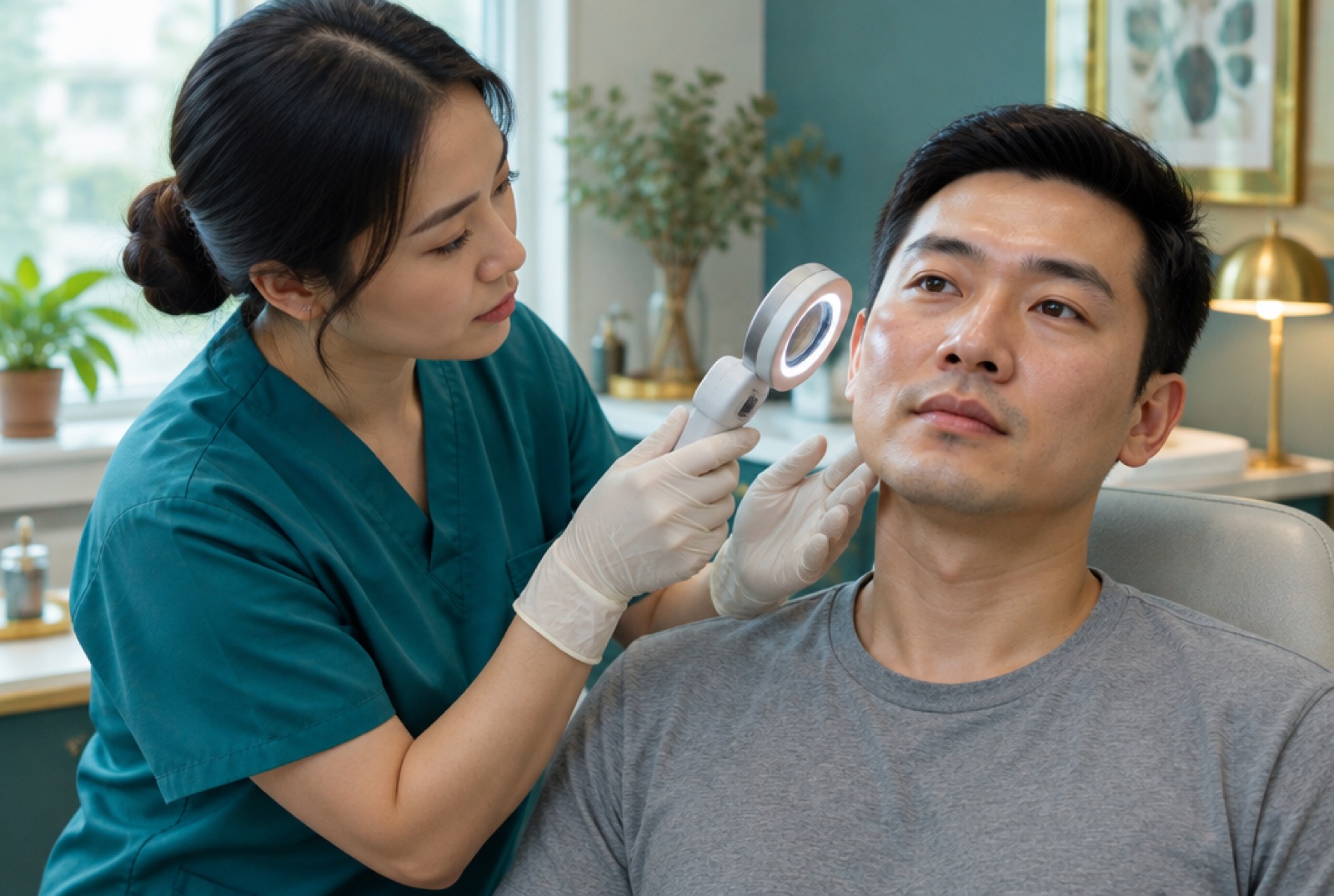
Before you go, it also helps to ask yourself what you want from treatment, and how much downtime and risk you’re willing to accept.
Be cautious of any clinic that sells before it assesses or promises results nobody can promise. Watch for:
Whatever a clinic calls itself, Korean-style or otherwise, the Ministry of Health’s 3P checks still apply. Ask who will treat you, whether they assess your skin first and whether the premises are registered with the Ministry of Health.
Cost depends mainly on the type of treatment and how much care it involves. Things that can affect it include:
The total can include aftercare and any further treatment you might need, so ask what the fee covers and get it in writing before you agree.
There’s no single clinic that suits everyone. The right one matches your concern, assesses your skin before recommending anything and passes the checks above. A clinic you’d visit for acne marks may not be where you’d take a mole that has changed.
Not always. A dermatologist is a medical doctor who diagnoses and treats conditions of the skin, hair and nails as well as cosmetic concerns, while “skin clinic” is a broad label that can cover medical clinics, aesthetic clinics and even salons. Ask who will assess and treat you.
Use the Ministry of Health’s “3P” check: the procedure, the practitioner and the premises. For aesthetic medical procedures, the practitioner should be a registered medical practitioner with an LCP, and the premises should be registered with the Ministry of Health. You can check a doctor’s registration with the Malaysian Medical Council.
See a doctor first if a mole has changed size, shape or colour, or is itchy, painful, bleeding or crusty, or if a new mark hasn’t gone away after a few weeks. What looks like a harmless age spot could be a skin cancer, so have it checked before any cosmetic treatment.
Every cosmetic procedure carries some risk, laser included. Results depend largely on the skill and experience of the person doing it, so ask how often they treat people with your skin tone and type, and what the risks are for you.
It depends on the clinic, so call or message before you go, especially if you want time with a doctor.
Match the type of clinic to your concern, compare two or three on the same checks and choose the one that assesses before it sells. Take the questions above with you and don’t feel rushed into a decision. If you’d like a skin assessment with us, you can find your nearest Westwood Clinic outlet and book a visit.
Not sure which option suits you?
Talk it through at a private assessment with our team.