
Hair
Women's health
Men's health
Wellness
Hair
Women's health
Men's health
Wellness
Quick answer
HIFU uses focused ultrasound energy to heat tissue beneath the skin, which may lead to gradual, modest tightening as the skin responds. It can be worth discussing for mild to moderate looseness around the face or neck, but it cannot remove excess skin or recreate the effect of a surgical facelift. Your starting skin, concerns and treatment plan shape what you might notice.
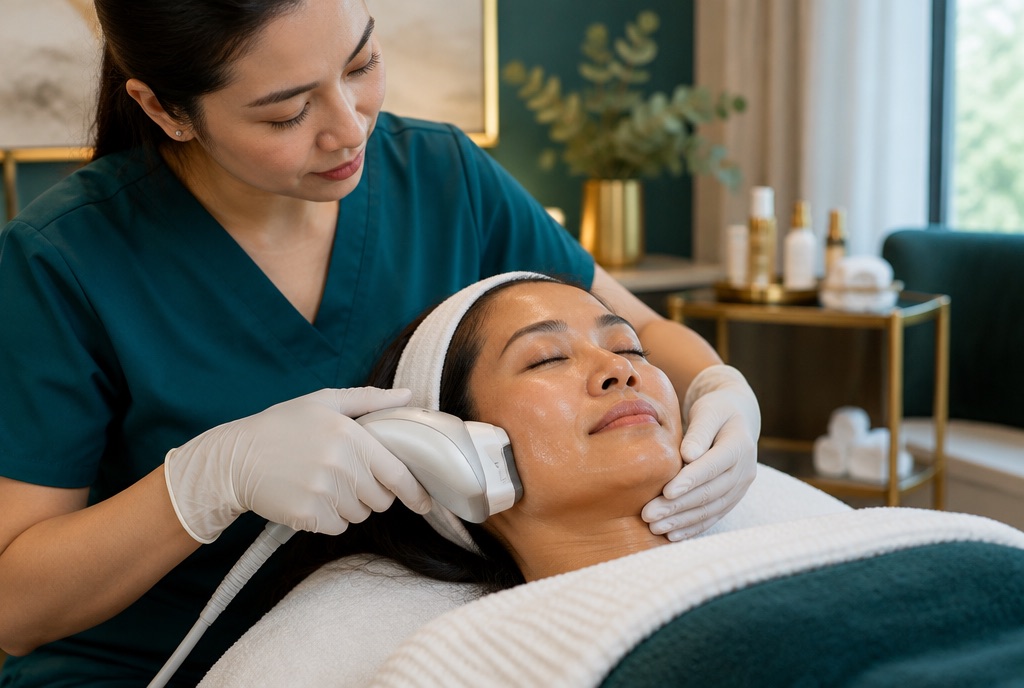
HIFU stands for high-intensity focused ultrasound. In cosmetic treatment, ultrasound energy is concentrated below the surface to create small areas of heat without making an incision, and that heating can stimulate collagen over time. Collagen is a protein that gives skin its shape and strength. Cosmetic HIFU uses lower energy than the HIFU used for medical treatments, to reduce the risk of skin damage.
Different devices reach different tissue depths. You may hear the term SMAS layer, meaning the supportive tissue sheet beneath facial skin that surgeons also work on during a facelift. Some focused-ultrasound devices are designed to reach deeper supporting tissue, but the exact depth and pattern of treatment depend on the device and plan. The name HIFU alone does not tell you what will happen to your face.
It helps to separate HIFU from a surface facial. A HIFU facial is an energy-based procedure, so suitability and possible side effects deserve a proper discussion. You can read Westwood Clinic’s HIFU treatment overview before asking what approach would be considered for your skin.
HIFU may help with mild to moderate skin laxity, such as early looseness around the jawline, lower face, brow or neck. Improvement is usually subtle rather than a sudden change in facial shape. Whether it makes sense depends on how much of your concern comes from loose skin, fat or loss of facial volume.
HIFU is less likely to satisfy someone with substantial excess skin or who wants a marked repositioning of facial tissues. Dermal fillers add volume in selected areas rather than tightening skin, while surgery can reposition tissue and remove extra skin. An honest assessment should say when another option, or no procedure, fits your goal better.

Changes from ultrasound skin tightening build gradually, because it takes time for the body to make collagen. The American Academy of Dermatology says that with one treatment most people see modest lifting and tightening within 2 to 6 months. Cleveland Clinic similarly says most people see the full effect about three to six months after the procedure.
There is no fixed answer to how long HIFU results last. How much you notice, and for how long, still varies with skin laxity, age, the treated area and the device used, and HIFU does not stop your skin from ageing.
Not sure which option suits you?
Talk it through at a private assessment with our team.
No. Skin continues to age after HIFU, and any improvement changes over time. Some people choose further treatment later, but whether that makes sense depends on their response and preferences.
The phrase non-surgical facelift can set the wrong expectation. HIFU does not cut away loose skin, and it does not move deeper tissues in the same way as a surgical facelift. Think of it as an option for a possible modest improvement, not as surgery without an operation.
You may feel warmth, tingling or brief discomfort while the ultrasound energy is delivered. The sensation can vary by treatment area and by person. Tell the treating team if it becomes difficult to tolerate rather than assuming you must sit through it.
HIFU can have side effects even though it does not involve an incision. According to Mayo Clinic, possible side effects of cosmetic HIFU include a change in skin colour, mild swelling or tingling, minor bruising or tenderness, skin irritation or burns, and nerve irritation. Cleveland Clinic notes that redness usually settles within about an hour and that tenderness can sometimes last for up to a month.
Before treatment, the care team should consider your other health conditions and whether you are pregnant. Also tell them if you are breastfeeding, have a skin infection or wound in the area, have an implant or device in the treatment area, or have reacted badly to an energy-based procedure before, and give a full list of your medicines.
There is usually little or no downtime, and most people go back to their routine soon after. Ask what to expect for your own plan and which symptoms should prompt a call. Any numbness, blistering or worsening pain needs advice from the treating clinic.
HIFU may improve the appearance of mild looseness beneath the chin or along the jawline, but a double chin is not always a skin-tightening problem. Fullness under the chin (the submental area) can involve fat as well as loose skin, and tightening skin will not necessarily reduce a larger pocket of fat.
Ask what is actually creating the profile you see. A fuller area may need a different approach from a loose skin fold, and more than one factor can be present. Westwood’s double-chin information can help you prepare questions for an assessment. HIFU should not be presented as a certain way to remove fat or create a sharp jawline.
HIFU, a thread lift and facelift surgery work in different ways and suit different degrees of change. HIFU heats tissue without an incision; a thread lift places threads under the skin to lift some tissue; a surgical facelift lifts deeper tissues and removes excess skin. The choice depends on the concern, the recovery you can accept and the risks you are willing to weigh.
| Option | What it is | Downtime | How results develop | May suit |
|---|---|---|---|---|
| HIFU | Focused ultrasound below the skin | Usually little or none; tenderness or swelling may occur | Gradual, over months | Mild to moderate laxity and a preference to avoid incisions |
| Thread lift | Threads placed under the skin with a thin cannula | Swelling and bruising for a few days | Some lift is visible earlier; appearance settles as swelling fades | People wanting a subtle lift without facelift surgery |
| Surgical facelift | An operation that repositions deeper tissue and removes extra skin | Longer recovery and wound care | Changes after surgery, then settles as healing progresses | More substantial sagging when surgery is appropriate |
A thread lift is not the same as HIFU just because both are described as alternatives to surgery. It involves inserting threads under the skin, and Cleveland Clinic lists uncommon complications including allergic reactions, bleeding, infection, and pulling or lumpiness. Read the thread lift treatment information and ask how its trade-offs compare with HIFU for your face.
Some searches compare HIFU with branded forms of ultrasound lifting. The useful comparison is between the actual devices and plans: how the treatment depth is chosen, whether imaging is used, which areas are treated and what evidence supports the expected change. A brand label alone cannot tell you whether a treatment suits you.
Cleveland Clinic says one treatment is usually enough, although some people need three or more sessions to reach their goal. The treated areas, skin laxity, device and treatment plan all affect what is recommended.
At your consultation, ask which areas would be treated, how the team will review your response, what is included in the plan and which side effects to watch for. The team can explain the options after assessing your skin and goals. Be cautious of a fixed package that promises a specific lift before anyone has examined you.
Before treatment, describe the change you hope to see and any previous aesthetic procedures in the area. Tell the clinician about your medicines, health conditions, pregnancy or breastfeeding, any skin problems and any implants. Ask what discomfort to expect, what aftercare you need and when you should come back for a review.
Afterwards, follow the instructions for your procedure. Your skin may look red or feel tender for a while, so treat it gently and contact the clinic if symptoms worsen or do not settle. Do not assume that no visible change the next day means the treatment failed; collagen changes take months.
It may be worth discussing if your concern is mild to moderate laxity and you would accept a modest, gradual change. It is less likely to meet a goal that needs excess skin removed or a major change in facial shape. An assessment should help you weigh the likely benefit against discomfort, risks and time.
No. Your skin continues to age, and the response varies between people, so how long the change lasts differs from person to person.
Warmth, tingling or discomfort can occur during treatment, and tenderness may continue for a while afterwards. The feeling varies by person and area. Tell the team if you feel unexpectedly strong pain.
There is no fixed answer. Cleveland Clinic says most people see the full effect about three to six months after the procedure. How long yours last depends on your skin, age and the area treated, because ageing continues.
The care team considers your health conditions and whether you are pregnant before deciding if HIFU is safe and appropriate for you. Tell them if you are breastfeeding, have a skin infection in the area or have an implant in the treatment area, so they can advise you individually.
HIFU uses focused ultrasound and works gradually; a thread lift places threads under the skin to lift tissue. Each has different risks and recovery. The better question is which problem you want to address and what change would be realistic for your face.
HIFU can be a reasonable option for early facial looseness, but it is not a substitute for a surgical facelift. The most useful next step is an assessment of your skin, the area that bothers you and the change you hope to see. Westwood Clinic can discuss whether HIFU or another approach is worth considering for you, so book an assessment when you are ready to ask about expected change, side effects and follow-up.
Not sure which option suits you?
Talk it through at a private assessment with our team.