
Hair
Women's health
Men's health
Wellness
Hair
Women's health
Men's health
Wellness
Quick answer
Pico laser is a medical laser treatment that fires extremely short pulses of light, measured in picoseconds, mainly at unwanted pigment such as dark spots and tattoo ink. Like other pigment lasers, it breaks pigment into tiny particles that your body then clears away. How well pico laser treatment works for you depends on your concern, your skin and the person treating you.
Pico laser, short for picosecond laser, is a pigment laser named after the length of its pulses. A picosecond is a trillionth of a second, and each pulse of light lasts only that long.
It’s a laser procedure, not a beauty treatment, so it belongs in a medical setting after a proper skin assessment. That matters more than the machine. The American Academy of Dermatology (AAD) notes that the results of a laser procedure depend largely on the skill of the person performing it, and that laser procedures done in non-medical settings, such as spas and shopping malls, may come with limited training, supervision and equipment.
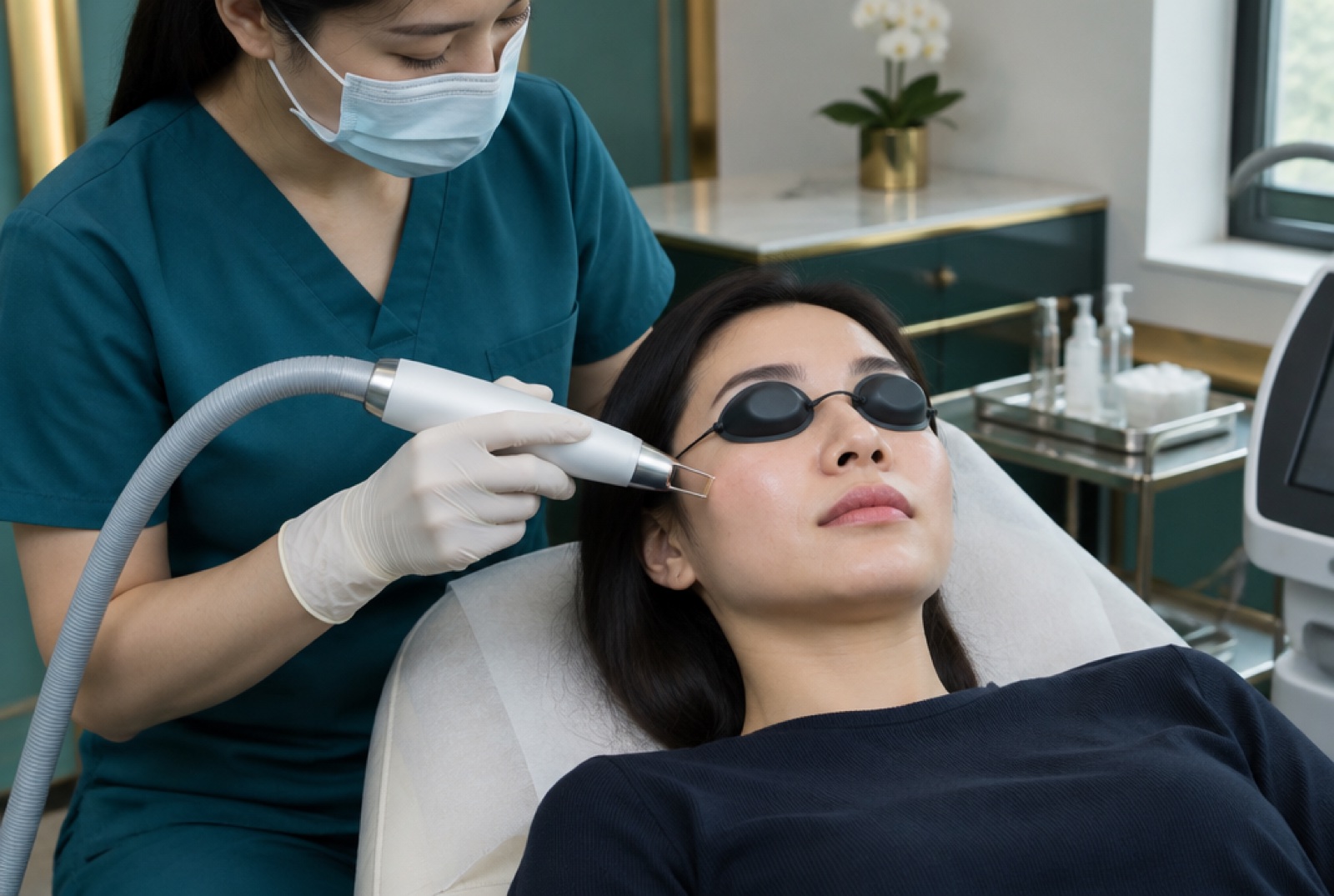
A pigment laser sends light into the skin, where it is absorbed by pigment. According to Cleveland Clinic, the laser light shatters the pigment into tiny particles, and your immune system then clears that debris away.
Here’s how that plays out for the two most common uses:
Before treatment, your doctor considers your natural skin colour and type, which helps lower the risk of the skin gaining or losing pigment.
Melasma and acne scars are trickier than ordinary dark spots, and a laser isn’t usually the first step for either.
Melasma treatment usually begins with sun protection and creams. Cleveland Clinic notes that lasers and chemical peels can cause darker patches and scarring in melasma, so they should only be used, alongside creams, by doctors experienced in treating melasma. The AAD adds that some melasma treatments can irritate darker skin and make melasma darker, that results usually take longer on darker skin, and that melasma commonly comes back when you spend time outdoors without protecting your skin from the sun.
Acne marks and acne scars are not the same thing. A flat spot of colour left after a pimple usually isn’t a scar; it’s likely post-inflammatory hyperpigmentation. True acne scars, which leave a dent or a raised area, rarely go away completely on their own. Dermatologists use lasers to resurface skin with acne scars, often as part of a plan that uses more than one treatment, and scar treatment typically starts once acne is under control. For more detail, read about pico laser for acne scars.
Not sure which option suits you?
Talk it through at a private assessment with our team.
Pico laser is mainly used for pigment concerns. According to the AAD and Cleveland Clinic, laser treatments for pigment and skin are used for:
If you’re hoping for a change in overall skin tone or texture, ask your doctor what results you can realistically expect for your skin before you start.
The main difference is pulse length. Older pigment lasers fire in nanoseconds (billionths of a second), while pico lasers fire in picoseconds (trillionths of a second).
Shorter doesn’t automatically mean better. We found no health source showing that pico lasers need fewer sessions, are safer or have less downtime than other pigment lasers, so be cautious of anyone who promises that. Which laser suits you depends on your concern, your skin tone and your doctor’s assessment.
| Pigment laser (pico or older nanosecond type) | Resurfacing (ablative) laser | |
|---|---|---|
| Pulse length | Picoseconds (pico) or nanoseconds (older type) | Not a pigment laser; removes the outer layers of skin |
| Main target | Pigment, which is broken into tiny particles | The skin surface |
| Typical use | Age spots, flat brown spots, tattoo ink | Acne scars, fine lines and wrinkles |
| Downtime | Redness, swelling or bruising for several days is possible; ask your doctor | More downtime: skin may be raw, ooze or blister for several days |
Pico laser may suit people with pigment concerns or some acne marks who have had their skin properly assessed. The AAD says lasers can be used on all skin types, but darker skin is more prone to burns and dark marks after laser treatment, and advises working with a doctor experienced in treating darker skin with lasers. If you have a medium or darker skin tone, ask about this directly.
Check with your doctor first if any of these apply to you:
Your doctor can also talk you through pico laser side effects and risks for your skin.
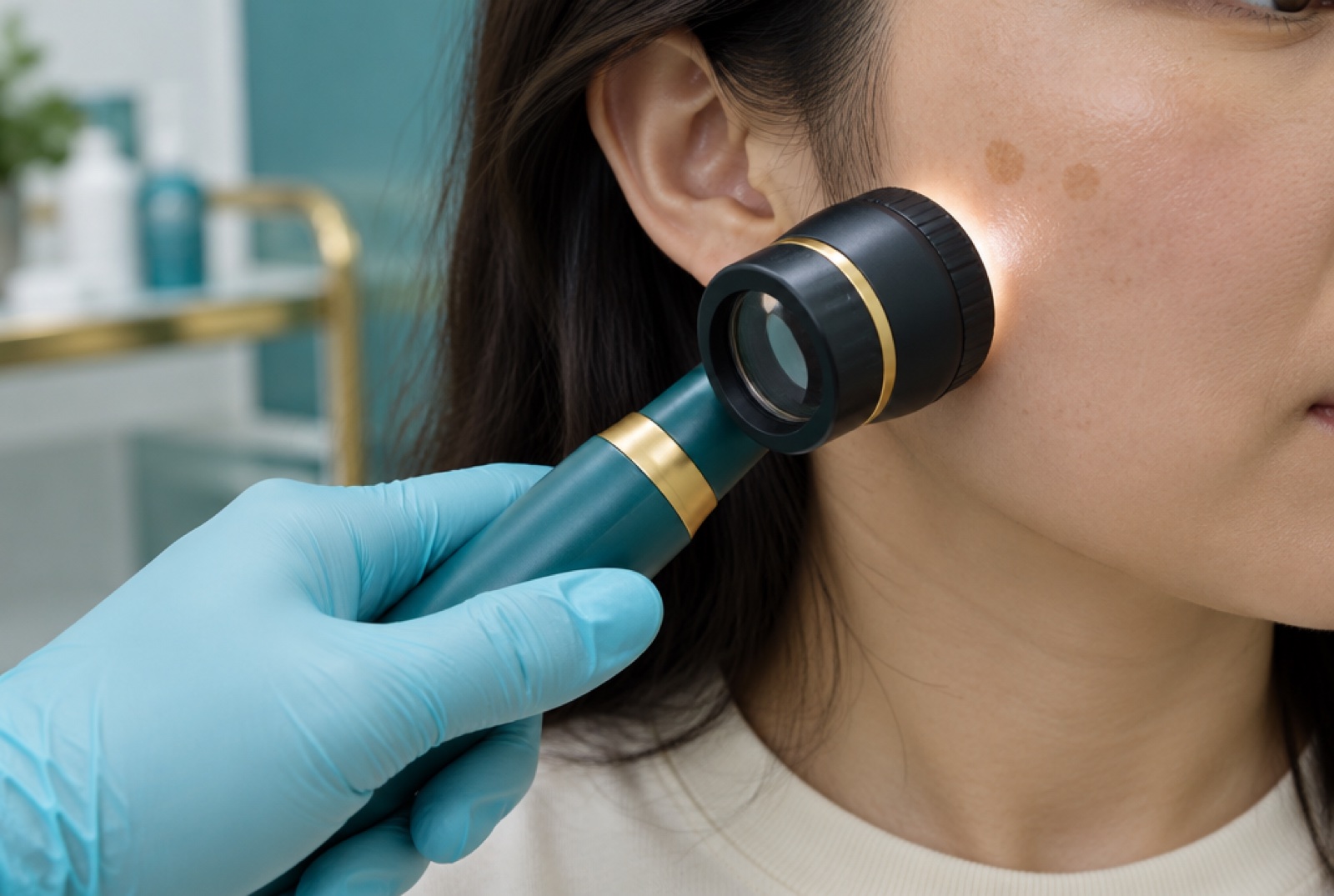
A session usually follows a few simple steps:
1. Assessment. Your doctor checks your skin and asks about the products, medicines and supplements you use. 2. Cleansing. The area to be treated is cleaned. 3. Numbing. Numbing cream may be applied, depending on the device used. 4. Eye protection. As is standard with laser treatments, everyone in the room wears protective eyewear. 5. Treatment. Many people describe laser pulses as feeling like warm pinpricks or a rubber band snapping against the skin.
Cleveland Clinic says treatment time with a pigment laser can range from several minutes to about half an hour, depending on the size of the area. To plan around your appointment, read what to expect before and after pico laser.
After a pigment laser, treated areas can be red, swollen or bruised for several days, followed by slight crusting, and treated spots may darken for a while before they fade. After laser treatments in general, pigment changes can happen: darker patches and, more rarely, lighter ones, and people with darker skin tones have a greater risk of healing with darker pigmentation. Don’t scratch or pick at skin that crusts, because that can lead to scarring or infection. For the full picture, read the side effects guide linked above or speak to your doctor.
It varies. Results differ from person to person, and you may need multiple treatments to see the results you want. The AAD notes that pigment lasers can be used at different intensities: lower settings mean less downtime but more treatments, and higher settings mean more downtime but fewer treatments.
Your doctor will suggest a plan after assessing your skin. For what recovery looks like and when results tend to show, see pico laser recovery and results.
The cost of pico laser depends on what’s being treated and how much treatment you need. The main factors are:
Ask for a clear explanation of what’s included before you start.
Pico laser is mainly used for pigment concerns such as age spots, sunspots, flat brown spots and tattoo ink. Lasers are also used, often with other treatments, for acne scars and, with extra care, for melasma.
Many people describe laser pulses as feeling like warm pinpricks or a rubber band snapping against the skin. Numbing cream may be applied first, depending on the device used, so ask your doctor what to expect.
Lasers can be used on all skin types, but darker skin is more prone to burns and dark marks after laser treatment. That’s why a proper skin assessment and a doctor experienced in treating darker skin with lasers matter so much. Ask how often they treat people with your skin tone.
Not in the sense that pigment can never return. Treatments can clear some dark spots and lessen others, but new spots can appear over time, especially without sun protection. Melasma in particular commonly comes back with unprotected sun exposure, so daily sun protection is one of the most important steps after treatment.
It’s different, not automatically better. Pico lasers use shorter pulses than older nanosecond pigment lasers, but which laser suits you depends on your concern, your skin tone and your doctor’s assessment.
If you want to treat melasma, the AAD advises waiting until after your baby is born, because melasma may improve after birth. The AAD also says people who are pregnant or breastfeeding should not have laser tattoo removal. For any other concern, tell your doctor you’re pregnant and ask whether you should wait.
Pico laser is a pigment laser that uses ultra-short pulses to break up pigment such as dark spots and tattoo ink so your body can clear it. It can help with several pigment concerns, but darker skin and melasma need extra care, and results vary from person to person. A skin assessment always comes first. If you’d like to know whether it suits your skin, book a skin assessment at Westwood Clinic.
Not sure which option suits you?
Talk it through at a private assessment with our team.