
Hair
Women's health
Men's health
Wellness
Quick answer
HIFU skin tightening uses high-intensity focused ultrasound to reach deep tissue layers and stimulate new collagen, with no cutting or stitches. It can suit people with mild to moderate loose skin on the face and neck, but results build gradually and it is not a surgical facelift. Some people should wait and speak with their healthcare provider first.
HIFU uses focused ultrasound to stimulate new collagen in deep tissue layers. Cleveland Clinic says the device typically reaches about 5 millimetres under the skin, which is where skin makes new collagen.
The dermis makes less collagen each year after about age 20, and lower oestrogen after menopause leaves skin drier, thinner and less taut. That’s why collagen sits at the centre of most conversations about loose skin.
For a fuller picture of what happens under the skin, read what HIFU does to your face. This article focuses on the reasons to consider it, its limits and who should wait.
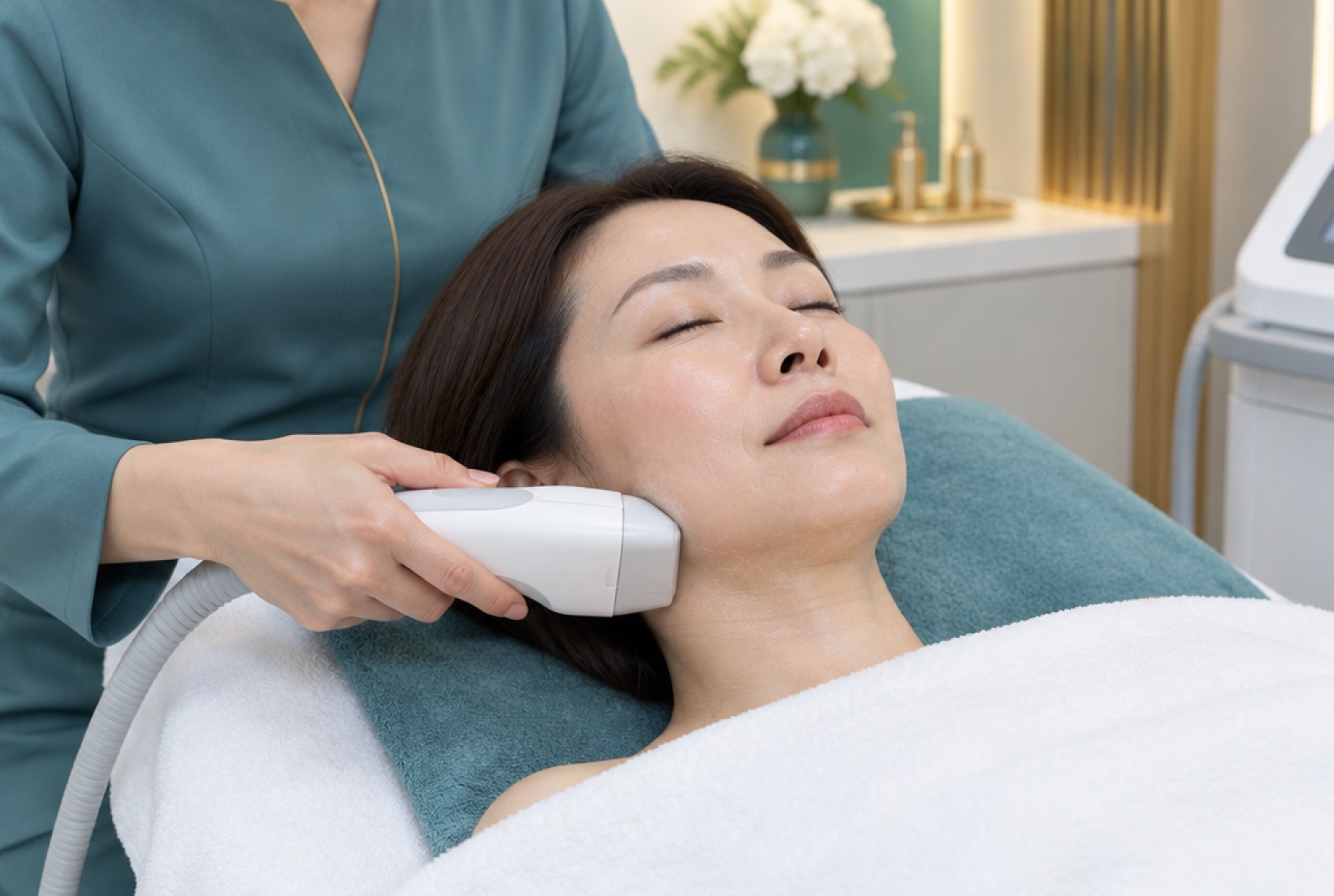
People consider HIFU because it is non-surgical, it works through the body’s own collagen and the change builds gradually. Here are six reasons, based on what Cleveland Clinic says about ultrasound skin tightening.
1. No cutting or stitches. HIFU is non-invasive, so there’s no cutting and no stitches. It may be an option if you can’t have or don’t want a facelift, or you’d like to put surgery off.
2. It works with your own collagen. The treatment stimulates new collagen growth. Cleveland Clinic says it may smooth wrinkles, improve skin elasticity, reduce the appearance of jowls, lift drooping eyelids or eyebrows and tighten the décolletage. These are possible benefits, not promises for your face.
3. Several areas can be treated. Cleveland Clinic lists the eyebrows, neck, under the chin and the décolletage (chest area). If fullness under your chin is your main concern, read our guide to HIFU for a double chin.
4. You can usually go straight back to normal activities. Cleveland Clinic says people can go right back to their normal activities without special post-procedure instructions. Some redness, bruising or tenderness is still possible, so ask what to expect.
5. One treatment is often enough. Cleveland Clinic says one treatment is usually sufficient, although some people need three or more sessions. Ask how your own plan would be decided.
6. Results look gradual. Most people see the full effect about three to six months after treatment, and some notice initial effects sooner. If you’d rather see a change develop slowly than overnight, that can suit you.
The main drawbacks are that results are gradual and modest, and they vary from person to person. HIFU is not surgery and can’t give the result of a surgical facelift.
Weigh these limits alongside the possible benefits:
If you’re comparing options, read how HIFU compares with a thread lift.
It’s fine to decide that a modest change isn’t enough for you. Say so at your assessment, especially if the change you want is much bigger.
Not sure which option suits you?
Talk it through at a private assessment with our team.

Cleveland Clinic says that if you’re pregnant, breastfeeding or have an autoimmune disease such as lupus or rheumatoid arthritis, you may not be a good candidate and should speak with your healthcare provider.
People with mild to moderate loose skin on the face and neck are the usual candidates. That’s a starting point for a conversation, not a reason to skip the assessment.
Tell the doctor about any health conditions, medicines, pregnancy or breastfeeding. At Westwood, a doctor assesses every patient before any treatment is suggested. If you’re not sure whether something matters, mention it anyway.
Cleveland Clinic lists minimal bruising and tenderness, and slight redness for about an hour after treatment. These effects are usually temporary, although tenderness can last a month in some cases.
How a session feels varies from person to person. Ask the doctor what to expect and how comfort is managed, and which symptoms should prompt a call after treatment.
Cleveland Clinic says the in-office procedure may take two to three hours, depending on the areas treated. Most people see the full effect about three to six months afterwards.
Some people notice initial effects sooner. If you’re planning around work or an event, separate the appointment time from the months it takes to judge the result.
HIFU can be worth considering if you have mild to moderate loose skin, want a non-surgical option and are happy to wait for a gradual change. It may not suit you if you want a big change or have a lot of loose skin.
Start with your concern, not the treatment name. Is it loose skin along the jawline, the jowls or another area? You don’t need to know the cause; just explain what you see and what you’d like to change.
Cleveland Clinic suggests reading up first and preparing questions about how the treatment works, what to expect and the cost. Useful questions include:
If the likely result sounds smaller than what you want, take time to think before agreeing to a plan.
There is no single price. Cost depends on which areas are treated, how many sessions you may need and what the doctor recommends after assessing you. When researching HIFU treatment in Malaysia, ask what’s included and what is still to be decided.
Our clinic is run by doctors, and a doctor assesses every patient before any treatment is suggested. You can find out whether HIFU treatment at Westwood Clinic makes sense for your skin, including the change you want and any reason to wait.
It can be worth considering for mild to moderate loose skin if you’re happy with a gradual, modest change. If you want a bigger change, ask whether another option would fit your expectations better.
No. HIFU stimulates collagen, but your skin keeps ageing after treatment. Think of it as a way to help loose skin, not a way to stop ageing.
People with mild to moderate loose skin on the face and neck are the usual candidates. If you’re pregnant, breastfeeding or have an autoimmune disease such as lupus or rheumatoid arthritis, speak with your healthcare provider, as you may not be a good candidate.
Cleveland Clinic says one treatment is usually sufficient, but some people need three or more sessions. Your doctor can advise after assessing your skin.
Possible side effects include minimal bruising, tenderness and slight redness, and tenderness can sometimes last a month. Pregnancy, breastfeeding and autoimmune disease need discussing with your healthcare provider first. Have an assessment rather than assuming the treatment suits everyone.
Cleveland Clinic lists the eyebrows, neck, under the chin and the décolletage. Ask which area, if any, makes sense for your concern.
HIFU may help tighten mild to moderate loose skin through collagen, without cutting. Results take months, vary from person to person and are not a facelift. Some people should wait, so an assessment is the place to talk through the limits and your health. When you’re ready, find your nearest Westwood Clinic outlet to book one.
Not sure which option suits you?
Talk it through at a private assessment with our team.